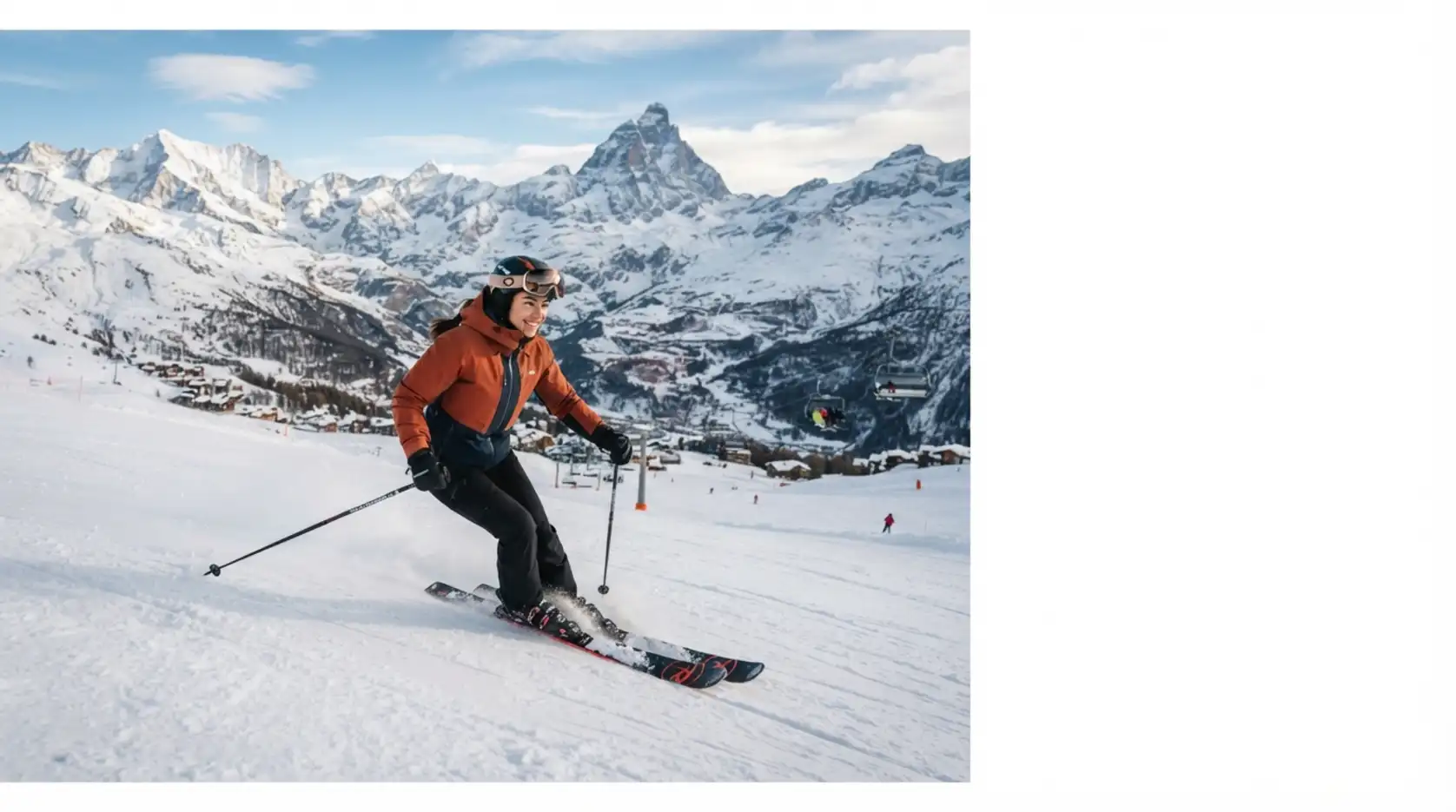
Typing fast after a day on the slopes, many people type “skiid” instead of “skied” — then stop and wonder which one is right. The short answer: “skied” is correct. “Skiid” is simply a common misspelling, not an accepted alternative.
This mix-up happens for a good reason. The verb “ski” doesn’t follow the usual English spelling pattern. Most one-syllable verbs ending in a vowel plus consonant double the last letter before adding “-ed” (like “stop” → “stopped”). But “ski” ends in two vowels (“s-k-i”), so people instinctively add extra letters to make the past tense “feel” right. The result is a made-up spelling like “skiid” or “skiied” that looks plausible but is wrong.
This article settles the confusion for good. You’ll get the quick answer, the grammar rule behind it, how British and American English treat the word, real usage examples, and answers to the questions people ask most often about “skied.”
“Skied” – Quick Answer
“Skied” is the correct past tense and past participle of the verb “ski.”
- Correct: I skied down the mountain yesterday.
- Correct: She has skied in the Alps three times.
- Incorrect: I skiid down the mountain.
- Incorrect: I skiied down the mountain.
There is only one accepted spelling: s-k-i-e-d. No hyphen, no doubled letter, no apostrophe.
The Origin of “Skied”
The word “ski” comes from the Norwegian word skíð, meaning “stick of wood” or “snowshoe.” It entered English in the 18th century as skiing became popular as a sport.
Because “ski” is a short, foreign-origin word ending in two vowels, English grammar rules for adding “-ed” don’t apply neatly. Regular verbs like “walk” or “jump” just add “-ed” (“walked,” “jumped”). Verbs ending in “e” drop the “e” before adding “-ed” (“bake” → “baked”). But “ski” doesn’t fit either pattern cleanly, since it ends in “i,” not a consonant or a silent “e.”
Because there was no perfect existing rule, English simply treated “ski” like a regular verb and added “-ed” directly: ski + ed = skied. No letters are doubled or dropped. This is why the spelling can look unfamiliar even though the rule behind it is simple.
British English vs American English Spelling
Unlike many words (like “colour” vs “color” or “travelling” vs “traveling”), “skied” is spelled the same way in both British and American English. There is no regional spelling variant for this word.
| Region | Past Tense Spelling | Example Sentence |
| American English | skied | He skied at Aspen last winter. |
| British English | skied | He skied in the Swiss Alps last winter. |
| Australian English | skied | We skied in New Zealand together. |
| Canadian English | skied | They skied every weekend this season. |
The only real variation is between the correct spelling (“skied”) and common misspellings (“skiid,” “skiied,” “ski’d”), which are wrong everywhere, not just in one region.
Which Spelling Should You Use?
Because “skied” is universal, the advice is simple no matter where you’re writing from:
- US writers: Use “skied.” No regional exceptions apply.
- UK and Commonwealth writers: Use “skied.” Style guides like Oxford confirm this spelling.
- Global or ESL writers: Stick with “skied.” It’s the only form accepted in dictionaries and grammar checkers worldwide.
If you’re writing for SEO, business content, or schoolwork, “skied” is the safe, correct choice in every English-speaking market.
Common Mistakes with “Skied”
- “Skiid” — an incorrect spelling, likely a typing slip or phonetic guess.
- “Skiied” — adds an extra “i,” another frequent typo.
- “Ski’d” — an outdated, informal shortcut rarely used in modern writing.
- “Skied” pronounced like “skeed” — some people mistakenly pronounce it this way; the correct pronunciation is “skeed” is actually right for the verb (rhymes with “steed”), but many assume it should rhyme with “skied” the adjective form used in phrases like a “well-skied slope,” which can cause confusion in speech, not just spelling.
- Confusing it with “skid” — a different word entirely, meaning to slide out of control.
“Skied” in Everyday Examples
In emails:
“We skied for three days straight and the conditions were perfect.”
In news writing:
“Olympic athletes skied through heavy snowfall during Thursday’s downhill event.”
On social media:
“Just skied my first black diamond run! 🎿❄️ #skitrip”
In formal writing:
“The research team skied across the glacier to collect ice core samples.”
“Skied” – Google Trends & Usage Data
Search interest in spelling questions like “skiid or skied” tends to spike during winter months (December through March), when ski season is active in the Northern Hemisphere. Countries with high search volume typically include the United States, United Kingdom, Canada, and Australia — all major skiing markets.
Search patterns show most people aren’t debating grammar for fun. They’re typing quickly on travel blogs, trip recaps, or captions and want a fast confirmation before posting. This is why simple, direct answers (like this article’s Quick Answer section) tend to satisfy search intent better than long grammar lessons.
Keyword Variation Comparison
| Term | Status | Correct Usage |
| Skied | Correct | Past tense of “ski” |
| Skiid | Incorrect | Common misspelling |
| Skiied | Incorrect | Common misspelling |
| Ski’d | Outdated/informal | Rarely used today |
| Skid | Different word | Means to slide uncontrollably |
FAQs
1. Is “skied” or “skiid” correct?
“Skied” is correct. “Skiid” is a misspelling with no dictionary support.
2. How do you pronounce “skied”?
It’s pronounced “skeed,” rhyming with “steed” or “seed.”
3. Is “skied” the same in British and American English?
Yes. Both use “skied” with no spelling difference.
4. What is the past participle of “ski”?
The past participle is also “skied,” as in “I have skied every winter since college.”
5. Why does “ski” not double its final letter before “-ed”?
Because “ski” ends in a vowel (“i”), not a single consonant, so the doubling rule for short verbs doesn’t apply.
6. Is “ski’d” ever acceptable?
It appears occasionally in casual or older writing but is not standard. “Skied” is preferred in all formal and most informal contexts.
7. What’s the difference between “skied” and “skid”?
“Skied” relates to skiing. “Skid” means to slide or lose control, often used for vehicles (“the car skidded on ice”).
Conclusion
The confusion between “skiid” and “skied” comes down to one simple fact: “skied” is the only correct spelling. It’s the past tense and past participle of “ski,” used the same way in American, British, Australian, and Canadian English. There’s no regional variation to worry about, which makes this an easy rule to remember once you’ve seen it clearly explained.
The mistake usually happens because “ski” doesn’t follow familiar spelling patterns — it ends in two vowels, so people guess at extra letters that don’t belong. Now that you know the origin and the rule, you can skip the second-guessing. If you’re writing a travel blog post, a formal report, or a quick social media caption, “skied” is always the safe, correct choice.
Stick with “skied,” avoid “skiid” and “skiied,” and don’t confuse it with the unrelated word “skid.” That’s the whole rule.