You type “hookie or hooky” into Google. Your cursor blinks. You just want to know which one is right.
You are not alone. Thousands of people search this every month. They text a friend. Then they stop. The word looks wrong both ways.
Here is why the confusion happens. The word is slang. It came from spoken English, not from books. Nobody sat down and picked one spelling. People wrote it the way it sounded. So three forms spread: hooky, hookey, and hookie.
Spell-checkers make it worse. Some flag one form. Some flag none. You get no clear answer.
This guide gives you that answer in one line. Then it shows you where the word came from. It shows you how British and American writers treat it. It gives you a table, real examples, and common mistakes to skip.
By the end you will pick the right spelling in one second. No second-guessing. No red squiggle panic. Just a clear rule you can use in school, at work, and online.
Hookie or Hooky – Quick Answer
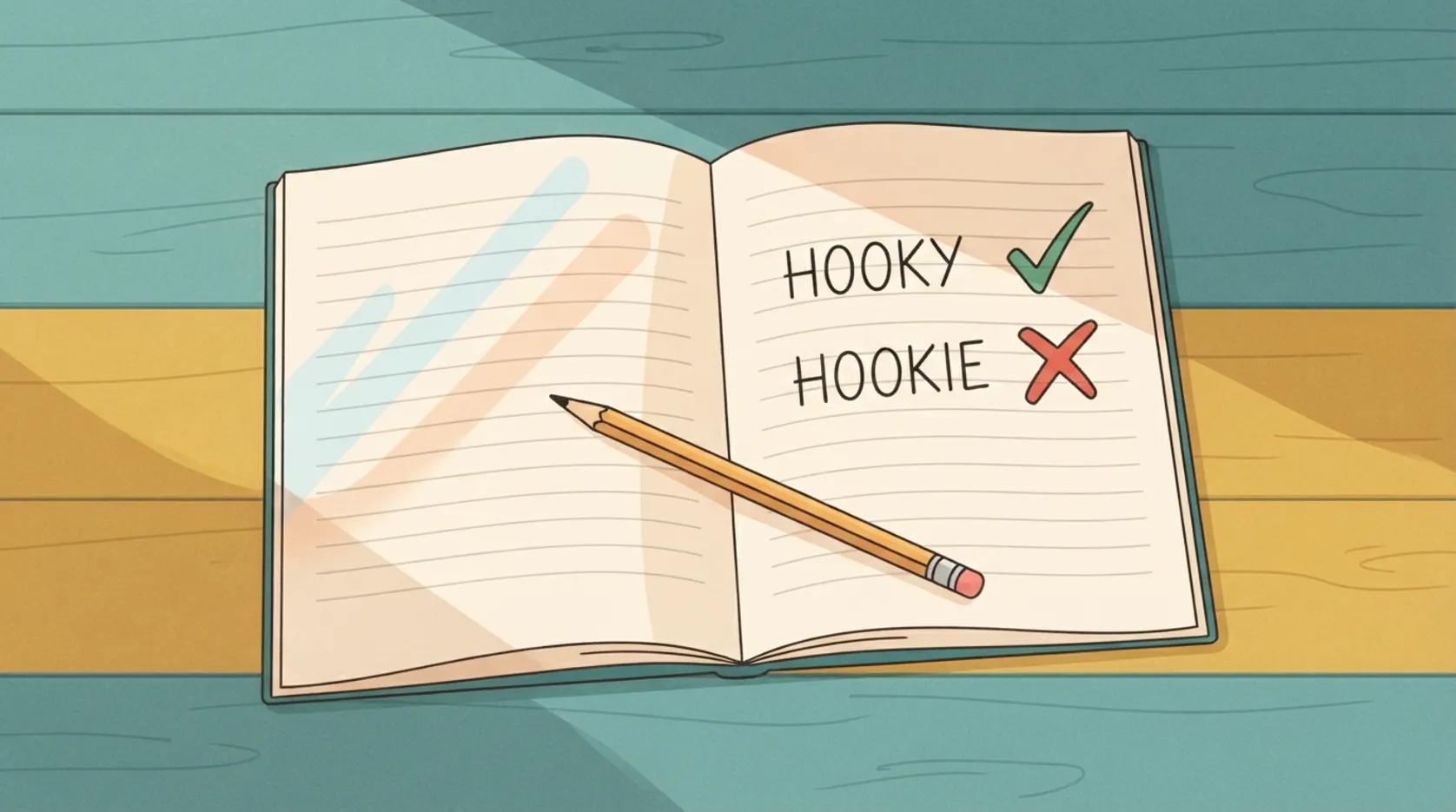
Use “hooky.” That is the standard spelling.
The phrase is “play hooky.” It means to skip school or work without permission.
- Correct: I played hooky on Friday.
- Correct: He is playing hooky again.
“Hookey” is a real variant. Dictionaries list it. It is just used less often. You will see it in older books and in some British writing.
- Also fine: She played hookey from class.
“Hookie” is not standard. Most dictionaries do not list it as the main form. Most editors will mark it wrong.
- Avoid: We played hookie yesterday.
So the short rule is simple. Write hooky. If you must pick a second choice, pick hookey. Skip hookie in anything formal.
The Origin of Hookie or Hooky
The word is American slang. Merriam-Webster dates the noun to 1842. It shows up in Bartlett’s Dictionary of Americanisms and in Mark Twain’s “Tom Sawyer,” where Tom is expected to play hooky and get put to work as punishment.
Where did it come from? Nobody is certain. Two ideas lead the field.
Idea one: “hook it.” Merriam-Webster points to old slang “hook” or “hook it,” meaning to make off or run away. Drop the “t” and you get “hooky.” A kid who hooks it is a kid who runs.
Idea two: a Dutch game. Green’s Dictionary of Slang links it to Dutch “hoekje (spelen),” meaning to play hide-and-seek. One account traces the word to Dutch New Amsterdam, now New York, where boys played “hoeckje” around the hooks or corners of the streets. Hiding from school fits the idea well.
A Canadian dictionary lists a third path: British dialect “hook,” to make off or run away.
Now the spelling part. Slang spreads by ear. Writers heard the sound and guessed the letters. English has no single rule for that ending. Think of “cookie,” “donkey,” and “lucky.” All three endings sound the same. So all three showed up here. Over time, “hooky” won in print. “Hookey” stayed as a backup. “Hookie” never made the cut.
British English vs American English Spelling

Here is the honest truth. This is not a real British-versus-American split.
“Color” and “colour” are a true split. Each side has its own rule. “Hooky” is different. The word is American from the start. Both “hooky” and “hookey” are American forms.
So what about Britain? British speakers rarely use this word at all. They have their own slang for the same act:
- Skive or skive off (most common in the UK)
- Bunk off (also British)
- Wag (Australia and parts of the UK)
- Play truant (formal, used in schools and law)
When British writers do use the American phrase, they lean a little more on hookey. P. G. Wodehouse wrote “I am playing hookey at the moment” in a 1939 novel. But even in the UK, “hooky” is common now. American media is everywhere.
Spelling Comparison Table
| Spelling | Status | Where you see it | Use it? |
| Hooky | Standard | US news, US dictionaries, modern writing worldwide | Yes. First choice. |
| Hookey | Accepted variant | Older books, some UK writing, historical texts | Yes, but rarely needed. |
| Hookie | Nonstandard | Social media, casual texts, typos | No. Avoid it. |
| Hookey/Hooky (UK) | Rare in daily speech | UK writers borrowing US slang | Use “skive” instead. |
Which Spelling Should You Use?
Pick by your reader. Here is the simple advice.
If you write for a US audience: Use hooky. Every time. It matches Merriam-Webster and the AP Stylebook style of plain American English. Your readers will not blink.
If you write for the UK, Ireland, Australia, or Canada: Use hooky too. It is safe and understood. But ask yourself one question first. Would skive off or bunk off sound more natural? For a UK blog or a UK ad, yes. Local slang builds trust.
If you write for a global audience: Use hooky. It is the most common form in search and in print. It is also the form most spell-checkers accept.
If you write history, fiction, or quotes: Use hookey when you copy an old source. Keep the original spelling inside quotation marks. That is standard practice.
If you write anything formal: Use neither. “Play hooky” is slang. In a legal notice, a school report, or an HR policy, write unauthorised absence or truancy instead.
Never use “hookie” in published work. It reads as a typo, even when your reader knows what you mean.
Common Mistakes with Hookie or Hooky
Here are the errors people make most. Each one has a quick fix.
1. Writing “hookie.” Wrong: I played hookie today. Right: I played hooky today.
2. Using “hook” alone. Wrong: He played hook from work. Right: He played hooky from work.
3. Adding an apostrophe. Wrong: I played hooky’s. Right: I played hooky. The word is not possessive. It never takes an apostrophe.
4. Mixing it up with “hookah.” Wrong: They played hookah from school. Right: They played hooky from school. A hookah is a water pipe. Very different word.
5. Mixing it up with “hooky” the adjective. “Hooky” can also mean catchy, as in a hooky pop song, or curved like a hook. Same spelling, different meaning. Context makes it clear.
6. Using it in formal writing. Wrong: The student played hooky on 14 March. Right: The student was absent without permission on 14 March.
7. Wrong verb. Wrong: I did hooky. / I made hooky. Right: I played hooky. The verb is always “play.”
8. Wrong preposition. Wrong: I played hooky of school. Right: I played hooky from school.
Hookie or Hooky in Everyday Examples
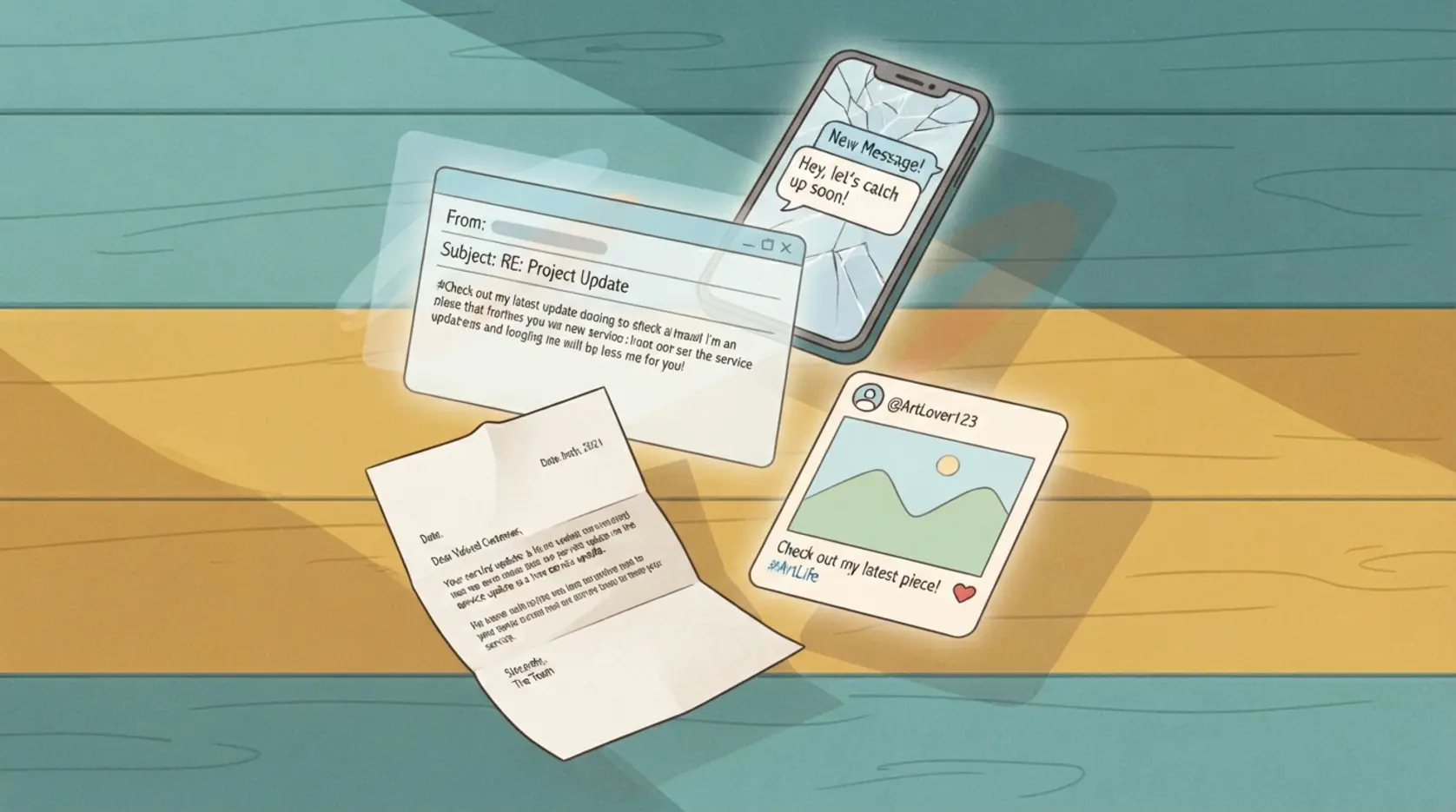
See how the word works in real life.
In a text message: “Let’s play hooky and hit the beach.” Casual. Friendly. Perfect fit.
In a work email (informal team): “I’m playing hooky this afternoon. Back online at four.” This works in a relaxed office. Know your culture first.
In a work email (formal): “I will be taking a half day of annual leave this afternoon.” Skip the slang here.
In a news headline: “Thousands of students play hooky as heat wave hits city.” Common in US papers. Light and readable.
On social media: “Sun’s out. Playing hooky. Don’t tell my boss.” Short. Punchy. Fits the tone.
In a marketing subject line: “Play hooky with us this Friday.” Brands use this a lot. It sounds fun and a little rebellious.
In fiction: “He played hooky for three days straight. Nobody noticed.” Works well in dialogue and first-person voice.
In a school letter: “Your child was recorded as truant on Tuesday.” Formal setting. Use “truant,” not “hooky.”
Hookie or Hooky – Google Trends & Usage Data
Search patterns for this word follow three clear lines.
By country. Interest is strongest in the United States. Canada comes next. The Philippines, Australia, and the UK show smaller but steady interest. That matches the history. The word is American, and American media carries it abroad.
By spelling. “Hooky” pulls far more searches than “hookey.” “Hookie” sits third, and most of those searches are people checking if they got it wrong. That is likely why you are here.
By season. Interest climbs in spring and early summer. Think warm days, late-term boredom, and the urge to skip class. There is also a small bump around big sporting events. In the US, the week of the NCAA basketball tournament is famous for workers taking the day off.
By context. Searches split into two groups. One group wants the spelling. The other wants the meaning, often non-native English speakers meeting the idiom for the first time.
One note on data. Exact trend numbers move month to month. Check Google Trends directly if you need current figures for a report. The broad pattern above has held for years.
Hookie or Hooky – Full Comparison Table
| Feature | Hooky | Hookey | Hookie |
| Correct? | Yes, standard | Yes, variant | No |
| In major dictionaries | Main entry | Listed as variant | Rarely listed |
| First recorded | 1842 as a noun | Same era | Later, informal |
| Most common in | United States | Older and UK texts | Casual online posts |
| Search volume | Highest | Low | Low |
| Use in formal writing | No (slang) | No (slang) | Never |
| Use in blogs and ads | Yes | Rare | No |
| Spell-checker accepts | Usually | Sometimes | Usually flagged |
| Best for | Everyone | Historical quotes | Nothing |
FAQs About Hookie or Hooky
1. Is it “hookie” or “hooky”? It is hooky. That is the standard spelling. “Hookie” is a common misspelling and is best avoided in any writing people will read.
2. Is “hookey” wrong? No. Merriam-Webster lists “hookey” as a less common variant of “hooky.” It is correct but dated. Choose “hooky” unless you are quoting an old text.
3. What does “play hooky” actually mean? It means to stay away from school without permission. People now also use it for skipping work or any duty. “I played hooky from the gym” is fine in casual speech.
4. Where does the word come from? Nobody knows for sure. One theory points to old slang “hook it,” meaning to run away. Another points to Dutch “hoekje spelen,” meaning hide-and-seek.
5. Do British people say “play hooky”? Some do, but it is not their first choice. British speakers usually say skive, skive off, bunk off, or play truant. “Play hooky” reads as American to a UK ear.
6. Is “play hooky” rude or offensive? No. It is mild and playful. Many brands use it in ads. Just remember it describes breaking a rule, so read the room at work.
7. Can I use “hooky” in a school essay or business report? Not really. It is slang. Use absent without permission, truancy, or unauthorised absence in formal writing. Save “hooky” for blogs, emails to friends, and social posts.
8. Is “hooky” a verb or a noun? It is a noun. You play hooky. There is no verb “to hooky.” Writing “I hookied” is wrong.
9. What is the plural? You almost never need one. The word is used in a fixed phrase. Dictionaries do list “hookies” or “hookeys” if you ever need it.
Conclusion
The answer is short. Write hooky. It is the standard spelling in dictionaries, in news, and in everyday writing. It is also the form most people search for.
Hookey is not an error. It is an older variant that dictionaries still accept. Keep it for historical quotes or when you copy an old source word for word. You will rarely need it.
Hookie is the one to drop. It looks like a typo because it is treated as one. It will get flagged in edits and it weakens your writing.
Remember the grammar too. You play hooky. You play hooky from school or work. No apostrophe. No verb form.
Match the word to your reader. American readers know “hooky” at once. British and Australian readers know it, but skive off or bunk off will sound more like home. Global readers are safest with “hooky.”
Last point. This phrase is slang. Keep it out of reports, legal notices, and school records. There, write truancy or unauthorised absence instead.
Now you can write it without pausing. One word. One spelling. Done.