Confused about If to write “party’s” or “parties”? You’re not alone. This tiny apostrophe trips up even confident writers. Get it wrong in an email, an invitation, or a headline, and it can look like a careless mistake. Get it right, and your writing reads clean and professional.
People search for “party’s or parties” because English apostrophes are sneaky. One tiny mark changes the entire meaning of a word — from “more than one party” to “something belonging to a party.” Add in plurals, possessives, and plural possessives, and it’s easy to freeze up mid-sentence.
This guide clears up the confusion for good. You’ll get a quick answer first, then a deeper look at where the confusion comes from, how native speakers actually use these words, and the mistakes to avoid. By the end, you’ll never second-guess that apostrophe again.
Party’s or Parties – Quick Answer
Here’s the short version:
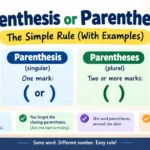
- Parties = more than one party. Plural. No apostrophe.
- Example: Three parties are planning to attend the meeting.
- Party’s = something belongs to one party. Singular possessive. Apostrophe before the “s.”
- Example: The party’s decorations were still up the next morning.
- Parties’ = something belongs to more than one party. Plural possessive. Apostrophe after the “s.”
- Example: Both parties’ lawyers agreed to the terms.
The rule is simple: no apostrophe means plural. An apostrophe means ownership.
The Origin of “Party’s” and “Parties”
The word “party” comes from the Old French word partie, meaning “a part” or “a side.” Over time, English speakers used it to mean a group of people — If that’s a group celebrating, a political group, or a side in a legal agreement.
The confusion around “party’s” and “parties” isn’t really about the word’s history. It comes from how English apostrophes work. English uses the apostrophe for two different jobs: showing ownership (possessive) and, in rare cases, making something plural (like letters or numbers, such as “mind your p’s and q’s”). Most nouns, though, never use an apostrophe to become plural. “Party” becomes “parties” the same way “baby” becomes “babies” — you drop the “y” and add “ies.”
This dual role of the apostrophe is the real source of the mix-up, not any difference in spelling traditions.
British English vs American English Spelling
Here’s something important to clear up: “party’s” versus “parties” is not a British-versus-American spelling difference. Both UK and US English follow the exact same rule for plurals and possessives. A writer in London and a writer in New York both write “parties” for the plural and “party’s” for the singular possessive.
Where British and American English do differ slightly is in some possessive style choices for words ending in “s,” and in general punctuation habits. Here’s a comparison:
| Rule | American English | British English |
| Plural of “party” | parties | parties |
| Singular possessive | party’s | party’s |
| Plural possessive | parties’ | parties’ |
| Possessive of names ending in “s” (e.g., James) | James’s or James’ (both accepted) | James’ (more common) |
| Overall apostrophe rule for “party” | Same rule applies | Same rule applies |
So if you’re choosing between “party’s” and “parties,” don’t worry about which country you’re writing for. The grammar rule is universal. The confusion comes from apostrophe use in general, not regional spelling.
Which Spelling Should You Use?
Since the rule doesn’t change by region, the real question is: what are you trying to say?
If you mean more than one party:
Use “parties.” This applies everywhere — US, UK, Canada, Australia, and beyond.
Example: Several parties submitted bids for the contract.
If you mean something belongs to one party:
Use “party’s.” This also applies everywhere.
Example: The party’s guest list kept growing.
If you’re writing a legal or business document:
Pay extra attention. Contracts often use “the parties” (plural, referring to two or more sides) and “each party’s obligations” (singular possessive, referring to one side’s duties). Legal writing leans heavily on precision here, so double-check every instance.
If you’re unsure which one fits:
Ask yourself: “Am I talking about more than one, or about something owned by one?” That question alone solves almost every case.
Common Mistakes with “Party’s” and “Parties”
Even careful writers slip up. Here are the most frequent errors:
- Using “party’s” for a simple plural.
❌ We invited three party’s to the event.
✅ We invited three parties to the event. - Forgetting the apostrophe for possession.
❌ The parties decorations were beautiful.
✅ The party’s decorations were beautiful. - Misplacing the apostrophe in plural possessives.
❌ Both party’s representatives signed the deal.
✅ Both parties’ representatives signed the deal. - Confusing “party’s” with “parties'”.
❌ The parties’ theme was tropical. (if only one party is meant)
✅ The party’s theme was tropical. - Adding an apostrophe out of habit before any final “s.”
This is called the “greengrocer’s apostrophe” and it’s a common typo trap, especially in signs and casual writing.
“Party’s” and “Parties” in Everyday Examples
In emails:
“Hi team, both parties have agreed to the new deadline. Please confirm the party’s final decision by Friday.”
In news headlines:
“Three parties join together before the election.”
“The opposition party’s leader leaves the position.”
In social media posts:
“I can’t believe how many parties are happening this weekend! 🎉”
“The party’s atmosphere was amazing last night.”
In formal writing (contracts and reports):
“Each party’s responsibilities are explained in Section 4.” The parties agree to review terms annually.”
Notice how the meaning shifts completely based on that one apostrophe. Reading it aloud and asking “who owns what, if anyone?” helps confirm you’ve picked the right form.
“Party’s or Parties” – Google Trends & Usage Data
Searches for “party’s or parties” spike around event-planning seasons — holidays, election cycles, and wedding season — when people write invitations, legal notices, or news copy and pause on the apostrophe.
Usage patterns show:
- General/casual writing (invitations, social posts): “parties” is used far more often, since most everyday sentences are plural, not possessive.
- Legal and political writing: “party’s” and “parties'” appear more frequently, since contracts and news coverage often describe ownership, positions, or obligations tied to specific groups.
- Global usage: The search interest is fairly consistent across English-speaking countries, confirming this is a grammar question, not a regional spelling one.
Comparison Table: Keyword Variations Side by Side
| Form | Meaning | Example | Apostrophe Position |
| Parties | More than one party | “Five parties attended.” | None |
| Party’s | Belonging to one party | “The party’s location changed.” | Before the “s” |
| Parties’ | Belonging to more than one party | “The parties’ agreement was signed.” | After the “s” |
| Partys | Incorrect spelling | ❌ Never correct | N/A |
FAQs
1. Is “party’s” ever used as a plural?
No. “Party’s” always shows possession, never a plural. The plural is always “parties.”
2. What’s the difference between “party’s” and “parties'”?
“Party’s” shows something belongs to one party. “Parties'” shows something belongs to two or more parties.
3. Is “partys” a correct spelling?
No. “Partys” is always incorrect. The correct plural is “parties.”
4. Do British and American English spell these words differently?
No. Both use the same spelling and the same apostrophe rules for “party’s,” “parties,” and “parties’.”
5. How do I know which one to use in a legal document?
Check If you’re referring to more than one side (use “parties”), or something owned by one side (use “party’s”) or by multiple sides (use “parties'”).
6. Why do people confuse “party’s” with “parties”?
Because apostrophes usually show possession, not plurals, but many writers mistakenly add one out of habit — especially before a final “s.”
7. Can “parties” ever need an apostrophe?
Only when showing possession for more than one party, in which case it becomes “parties'” — apostrophe after the “s.”
Conclusion
The choice between “party’s” and “parties” comes down to one simple question: are you talking about more than one party, or something that belongs to a party? “Parties” is the plain plural — no apostrophe needed. “Party’s” shows one party owns something. “Parties'” shows more than one party owns something.
This isn’t a British-versus-American spelling issue. The rule stays the same everywhere English is written. The confusion comes from the apostrophe’s double duty in English: marking ownership most of the time, and only rarely marking a plural.
Next time you’re stuck, pause and ask If you mean “more than one” or “belonging to.” That question will guide you to the right form almost every time. If you’re writing an email, a contract, or a party invitation, getting this small detail right makes your writing look polished and careful — and it takes just a second to check.
.