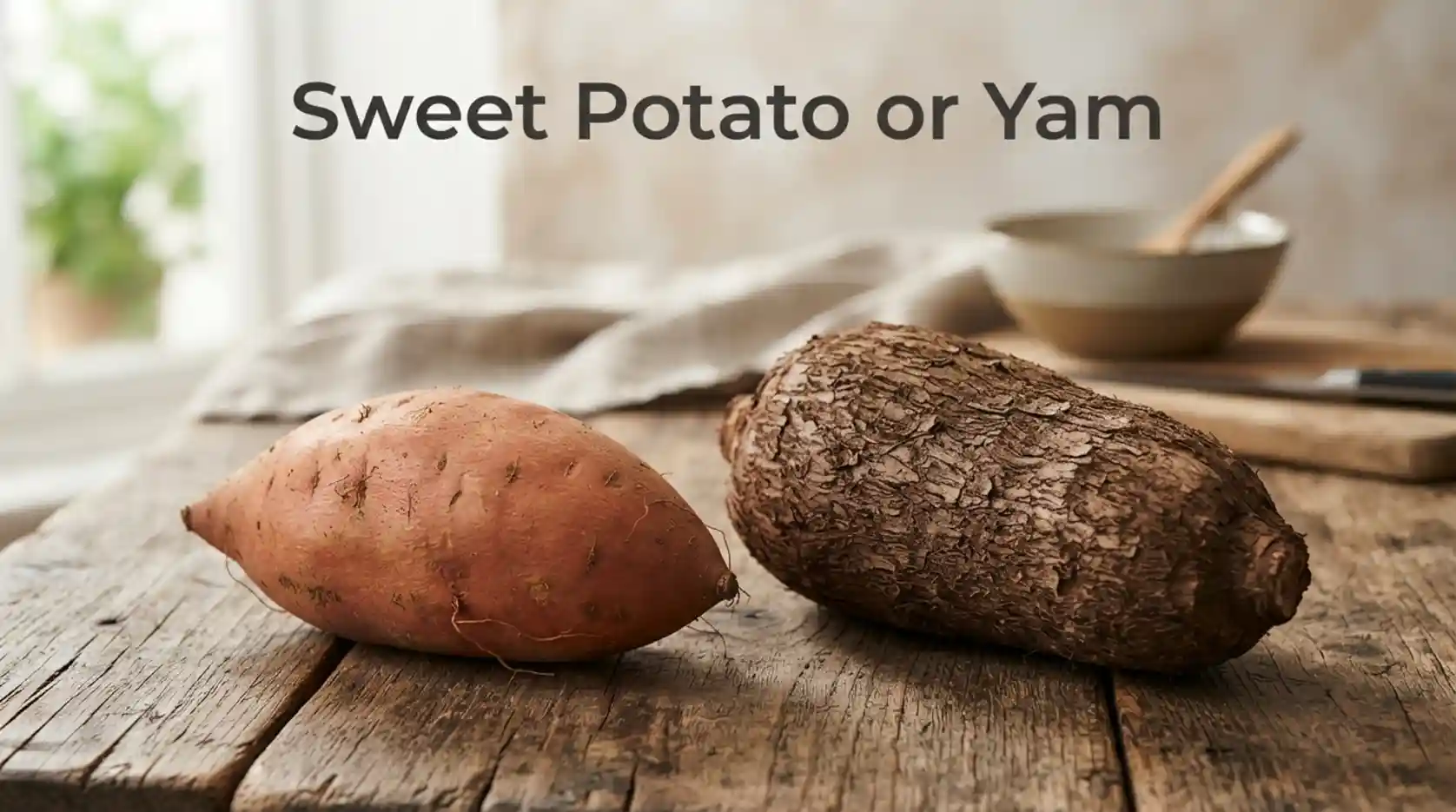
You’re standing in the grocery store. One bin says “yams.” Another says “sweet potatoes.” They look almost the same — orange, oblong, dirt-covered. So which one do you actually need for that holiday recipe?
This is one of the most searched food-confusion questions every fall. People search “sweet potato or yam” because grocery stores, recipes, and even family traditions use the words interchangeably — but botanically, they’re not the same plant at all. This mix-up didn’t happen by accident. It goes back to marketing, history, and regional language habits in the US.
This article clears up the confusion once and for all. You’ll get a quick answer, the history behind the name mix-up, how the terms differ across countries, common mistakes people make, real-world examples, and answers to the most common questions. By the end, you’ll know exactly which one you’re buying, cooking, and calling by the right name.
Sweet Potato or Yam – Quick Answer
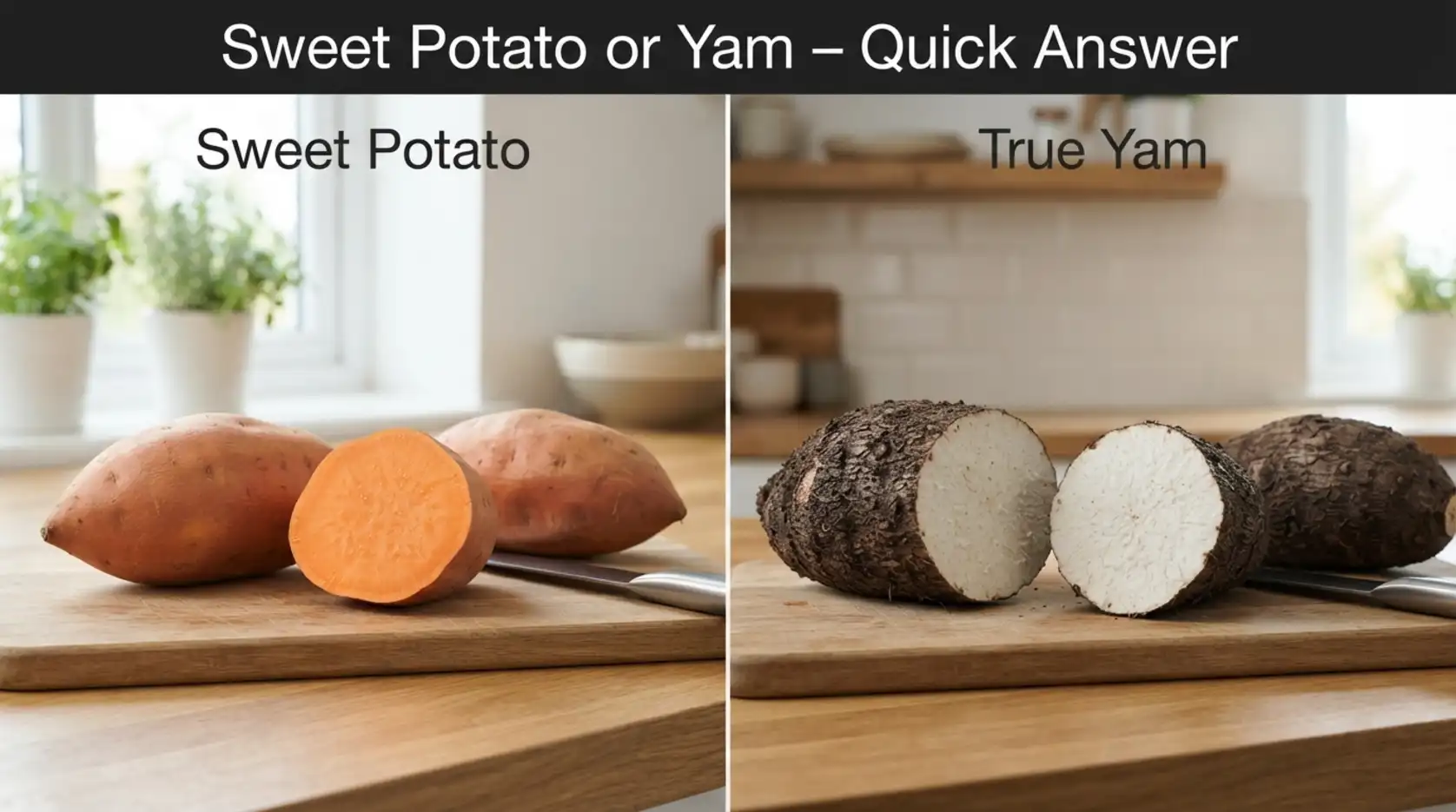
Short answer: most of what Americans call “yams” are actually sweet potatoes.
- Sweet potato: A root vegetable in the morning glory family (Ipomoea batatas). Orange, sweet, moist flesh. This is what’s sold in US grocery stores, even when labeled “yam.”
- True yam: A starchy tuber in a completely different plant family (Dioscorea). Dry, starchy texture, dark rough skin. Mostly grown in Africa, Asia, and the Caribbean — rarely sold in US supermarkets.
Example: The candied “yams” served at Thanksgiving are almost always sweet potatoes.
The Origin of Sweet Potato or Yam
The confusion started in the 1930s. Louisiana farmers grew a soft, orange-fleshed sweet potato and needed a way to separate it from the firmer, paler sweet potato varieties already on the market. They borrowed the West African word “nyami” (the origin of “yam”) to market their new variety as something distinct and exotic.
The name stuck. Over decades, US grocery stores kept labeling orange sweet potatoes as “yams,” even though true yams were never involved. Today, the USDA requires any product labeled “yam” to also say “sweet potato” somewhere on the packaging — because legally, almost none of it is a real yam.
British English vs American English Naming
This isn’t really a spelling difference — both words are spelled the same everywhere. It’s a naming difference, and it changes by country.
| Term | United States | United Kingdom | West Africa / Caribbean |
| “Sweet potato” | Orange root vegetable, common in stores | Same plant, most common term used | Sometimes called “sweet potato” too |
| “Yam” | Often mislabeled; usually means sweet potato | Rarely used for the orange vegetable | True yam — starchy tuber, different plant |
| Common confusion | Yes — labels mix the two | Low — “yam” is used correctly | None — yam means yam |
In the UK, “yam” almost always refers to the real starchy tuber, often sold in African and Caribbean grocery stores. In the US, “yam” is a marketing label, not a botanical one.
Which Term Should You Use?
- In the US: Say “sweet potato” for accuracy. If a recipe says “yam,” it almost certainly means sweet potato.
- In the UK or Commonwealth countries: “Yam” refers to the real tuber. Don’t use it for the orange sweet potato — ask for “sweet potato” instead.
- In global or professional writing: Use “sweet potato” unless you’re specifically referring to the African/Caribbean Dioscorea tuber. Clarify with the botanical name if precision matters (e.g., in nutrition or agriculture writing).
Common Mistakes with Sweet Potato or Yam
- Assuming they’re the same plant. They’re not even in the same plant family.
- Using “yam” in a recipe title for US readers, causing shoppers to buy the wrong item.
- Writing “yams” in nutrition content when the data actually describes sweet potatoes — this skews facts like sugar content and vitamin A levels.
- Believing purple or white sweet potatoes are “yams.” They’re still sweet potatoes, just different varieties.
- Calling true yams “sweet potatoes” in international contexts, which erases an important cultural food distinction.
Sweet Potato or Yam in Everyday Examples
- Grocery store sign: “Yams $1.29/lb” — almost always sweet potatoes.
- Recipe blog: “Candied Yams Recipe” — ingredient list calls for sweet potatoes.
- News headline: “Sweet Potato Farmers See Record Harvest” — accurate use of the botanical term.
- Social media post: “Yam fries vs sweet potato fries — is there even a difference?” — reflects the ongoing public confusion.
- Formal/nutrition writing: “Sweet potatoes are rich in beta-carotene” — correct scientific term used in health content.
Sweet Potato or Yam – Search & Usage Data
Search interest in “sweet potato vs yam” spikes every November in the US, tied to Thanksgiving shopping and recipe searches. It’s a heavily US-driven search term — interest is far lower in the UK, where the words aren’t commonly confused.
| Region | Common Search Intent |
| United States | “Are yams and sweet potatoes the same?” — recipe and shopping confusion |
| United Kingdom | Rarely searched — terms already used correctly |
| Africa / Caribbean | Searches relate to true yam recipes, not the US confusion |
| Canada | Similar pattern to the US, seasonal spike around Thanksgiving |
Comparison Table: Term Variations Side by Side
| Feature | Sweet Potato | True Yam |
| Plant family | Morning glory (Convolvulaceae) | Yam family (Dioscoreaceae) |
| Skin | Thin, smooth, orange/red/purple | Thick, rough, bark-like |
| Flesh | Moist, sweet, orange or white | Dry, starchy, white or purple |
| Common in | US, UK, most of the world | West Africa, Caribbean, parts of Asia |
| US grocery label | Often mislabeled “yam” | Rarely sold |
FAQs
1. Are sweet potatoes and yams the same thing?
No. They come from different plant families and have different textures, even though US stores often label sweet potatoes as “yams.”
2. Why does the US call sweet potatoes “yams”?
A 1930s marketing decision by Louisiana farmers borrowed the African word “yam” to distinguish a new soft sweet potato variety.
3. Can I substitute a yam for a sweet potato in a recipe?
If the recipe calls for “yam” and you’re in the US, it almost certainly means sweet potato — so no substitution is needed.
4. Which is healthier, sweet potato or yam?
Sweet potatoes are higher in vitamin A and beta-carotene. True yams are higher in fiber and resistant starch, with a lower glycemic impact.
5. Where can I buy real yams?
Real yams are usually found in African, Caribbean, or Asian grocery stores, not standard US supermarkets.
6. Is purple sweet potato a yam?
No. Purple sweet potatoes are still sweet potatoes — just a different variety with purple flesh.
7. Do the British use “yam” and “sweet potato” differently than Americans?
Yes. In the UK, “yam” usually means the true starchy tuber, while Americans often use “yam” loosely to mean sweet potato.
Conclusion
The “sweet potato or yam” confusion isn’t about spelling — it’s about decades of mislabeling that started with a 1930s marketing move. In the US, almost everything sold as a “yam” is actually a sweet potato, a completely different plant from the true yam found in African, Caribbean, and Asian markets.
If you want to be accurate, default to “sweet potato” unless you’re specifically talking about the starchy Dioscorea tuber. In the UK and Commonwealth countries, “yam” already refers correctly to the real thing, so no correction is needed there. For recipes, nutrition writing, or shopping, knowing this difference helps you pick the right ingredient and avoid confusing your readers or customers.
Bottom line: when in doubt, say “sweet potato” — you’ll almost always be right.