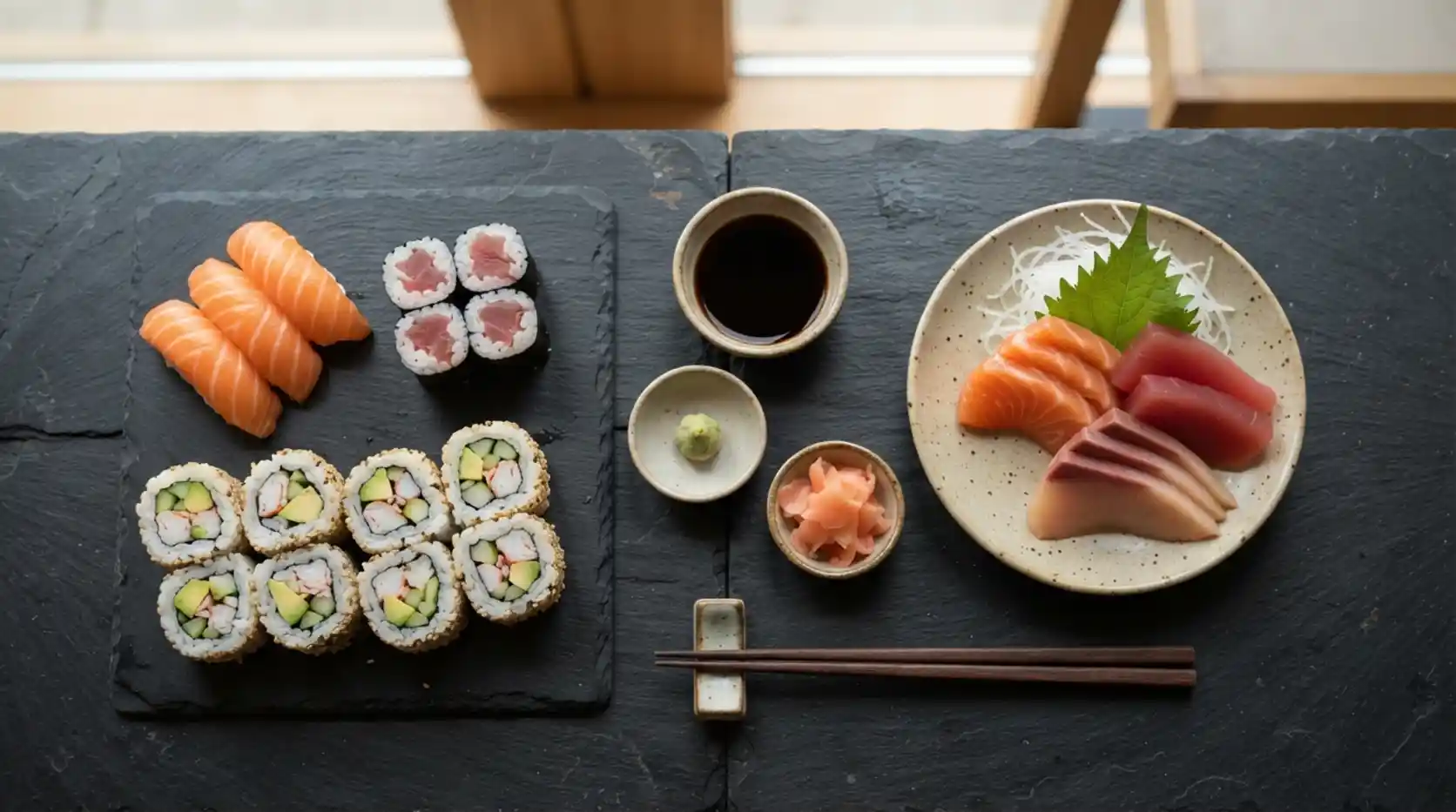
You sit down at a Japanese restaurant. The menu is long. Two words jump out: sushi and sashimi. They look alike. They sound alike. Both often come with raw fish. So which one should you order?
You are not alone. Many people search “sushi or sashimi” every month. They want a fast answer. Some are ordering dinner. Some are on a diet. Many think the two words mean the same thing. They do not.
The confusion is easy to understand. Most sushi bars serve both dishes. They sit side by side on the menu. The photos can look almost the same. Even the names feel like twins.
This guide clears it up. You will get a quick answer first. Then you will learn where the words come from, how people use them in English, and which mistakes to avoid. You will also see real examples, search trends, and a handy table. By the end, you will order with confidence. Let’s start.
Sushi or Sashimi – Quick Answer
Sushi is made with rice. Sashimi is just the fish.
Sushi is a dish built on vinegared rice. It can have raw fish on top. It can also have cooked fish, egg, or vegetables. Sashimi is thin slices of raw fish or seafood. It has no rice.
Here are some examples:
- Sushi: nigiri (a fish slice on a rice ball), maki (rolls with seaweed), California roll, cucumber roll
- Sashimi: sliced salmon, tuna, yellowtail, or scallop, often served with soy sauce, wasabi, and radish
Simple rule: if you see rice, it’s sushi. If you see only fish, it’s sashimi.
The Origin of Sushi or Sashimi
Both words come from Japanese. Their stories are different.
Sushi comes from an old word that means “sour.” Long ago, people packed fish in rice to keep it from spoiling. The rice fermented and turned sour. People threw the rice away and ate the fish. Over time, cooks in Japan began eating the rice too. Later, they added vinegar to make it faster. In the early 1800s, street cooks in Edo (now Tokyo) made the hand-pressed style we call nigiri.
Sashimi is a mix of two parts: sashi means “to pierce” and mi means “flesh.” One popular story says cooks once stuck the fish’s tail or fin into the slices. That helped people know which fish they were eating.
Why do spelling differences exist? Japanese uses its own characters. English writers use the Latin alphabet. The most common system is called Hepburn romanization. It gives us “sushi” and “sashimi.” You may also see “zushi” inside longer names, like “chirashizushi.” That is a normal sound change in Japanese. It is not a mistake.
British English vs American English Usage
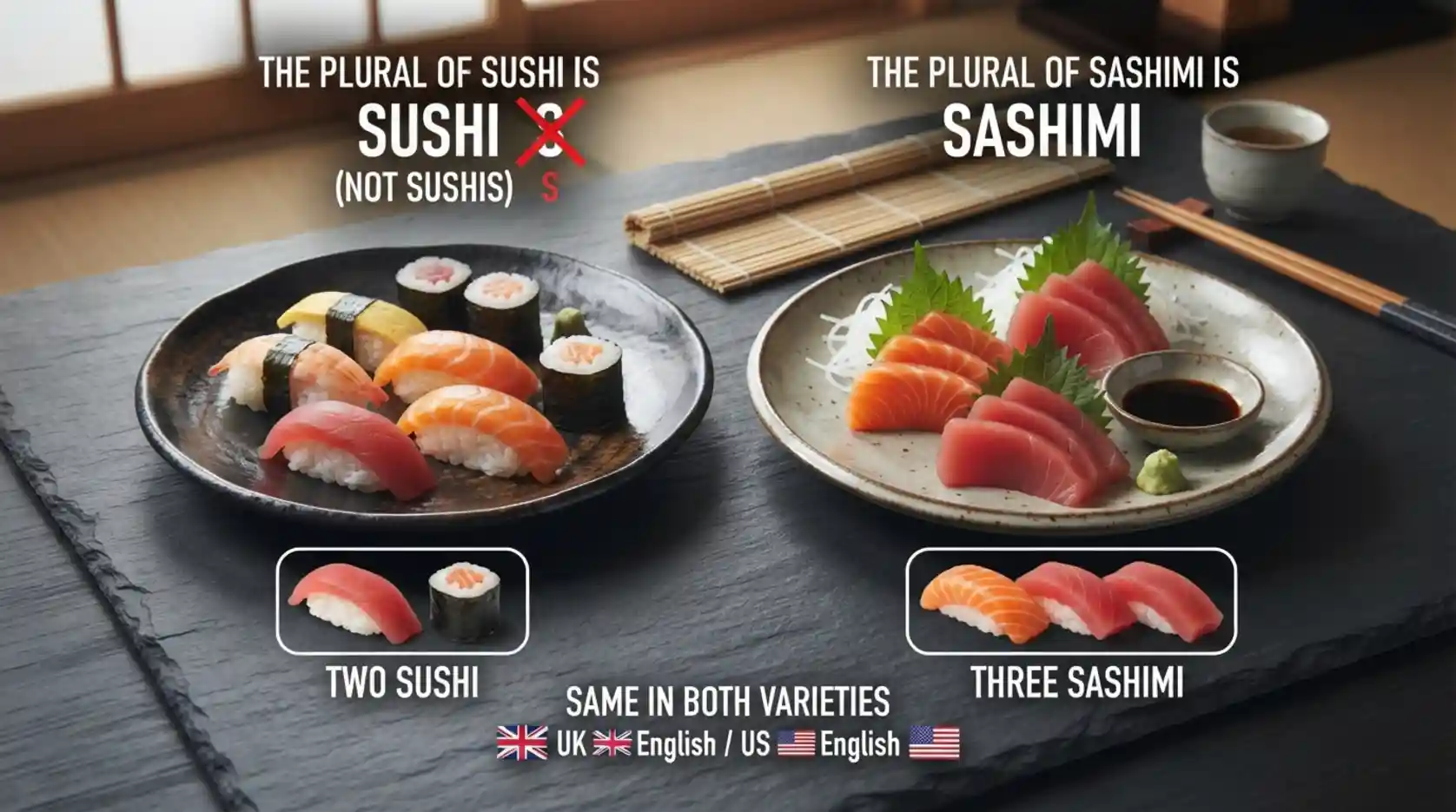
Here is the good news. British and American English spell both words the same way. Neither word changes in the plural. You say “two sushi” or “three sashimi,” not “sushis.”
Some small differences do show up in everyday use:
| Feature | American English | British English |
| Spelling of sushi | sushi | sushi |
| Spelling of sashimi | sashimi | sashimi |
| Plural | sushi / sashimi | sushi / sashimi |
| Common way to say it | “sushi roll,” “sushi place” | “sushi bar,” “sushi restaurant” |
| Common menu wording | “raw fish” | “raw fish” |
| Takeaway/takeout | “sushi to go,” “takeout” | “sushi takeaway” |
| Pronunciation of sashimi | sa-SHEE-mee | sa-SHEE-mee |
In short, the words are the same. Only the words around them change a little.
Which Term Should You Use?
Pick the word that matches your dish, not your country.
- US readers: Use “sushi” for rice dishes and “sashimi” for plain sliced fish. Say “takeout” for food to go.
- UK and Commonwealth readers: Use the same words. Say “takeaway” for food to go.
- Global audience: Stick to “sushi” and “sashimi.” Most people around the world know both. Add a short note, like “sashimi (raw sliced fish),” if your readers may be new to it.
Pro tip: If you are writing a menu or blog, never use them as swaps. A guest who orders “sushi” will expect rice.
Common Mistakes with Sushi or Sashimi
- Thinking sushi means raw fish. It does not. Sushi means vinegared rice. Many rolls have cooked or veggie fillings.
- Calling sashimi “sushi.” Fish with no rice is sashimi.
- Writing “sushis.” The plural is just “sushi.”
- Misspelling sashimi. Wrong: sashmi, sashimmi, sasimi. Right: sashimi.
- Saying “sa-SHIM-ee.” The right sound is “sa-SHEE-mee.”
- Thinking wasabi is the sushi. Wasabi is a spicy paste that goes with it.
- Assuming sashimi is always healthier. It has less rice, so fewer carbs. But it is still raw fish. Food safety matters.
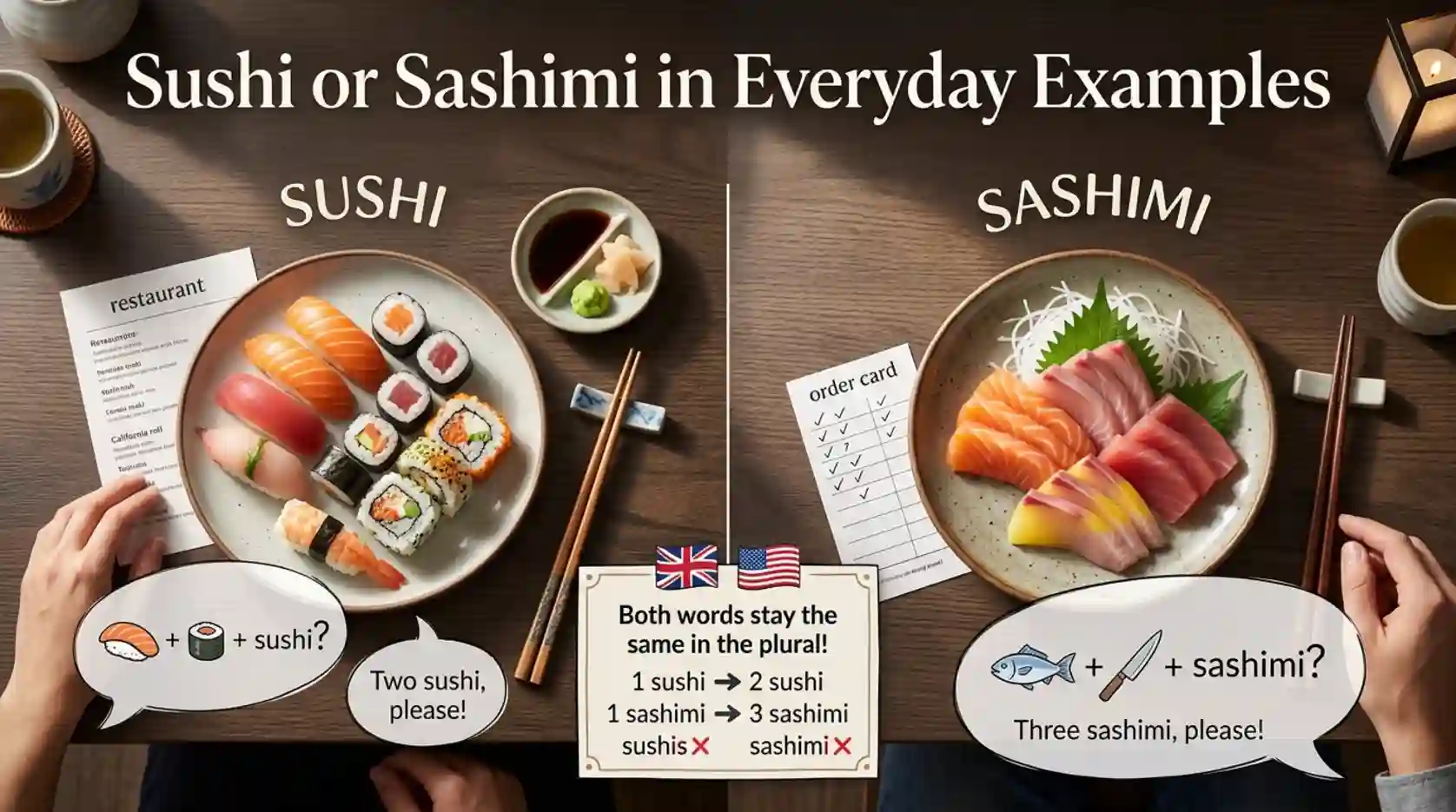
Sushi or Sashimi in Everyday Examples
Email:
“Hi team, lunch is booked at a sushi place near the office. There will be sashimi for anyone who wants no rice.”
News headline:
“Sushi chain opens 20 new stores as demand for sashimi grows.”
Social media:
“Sashimi night with the crew. Salmon, tuna, and zero rice. 🍣”
“Can’t decide: sushi or sashimi? Tell me below!”
Formal writing:
“Sashimi refers to thinly sliced raw fish served without rice. Sushi refers to dishes made with vinegared rice.”
Sushi or Sashimi – Google Trends & Usage Data
Search interest tells a clear story. I did not pull live numbers for this article, so please check the latest figures in Google Trends before you publish. These are the general patterns you can expect to see:
- “Sushi” is searched far more than “sashimi.” It is the bigger, more familiar word worldwide.
- “Sushi or sashimi” and “sushi vs sashimi” are question searches. They come from people who are new to Japanese food or want a quick answer.
- Interest is strong in countries with many sushi restaurants. These include the United States, the United Kingdom, Canada, Australia, and Japan itself.
- Context changes the search. Some people search before dining out. Others search when they want low-carb or high-protein meals, which lifts interest in sashimi.
- Food-safety searches spike around pregnancy and raw-fish worries. These often pair with “sashimi.”
Tip: In Google Trends, compare “sushi,” “sashimi,” and “sushi vs sashimi” by country and by past 5 years to see your own market.
Side-by-Side Comparison of Keyword Variations
| Term | Meaning | Has Rice? | Always Raw? | Example |
| Sushi | Dish built on vinegared rice | Yes | No | Cucumber roll |
| Sashimi | Thin slices of raw fish | No | Yes | Sliced salmon |
| Nigiri | Fish on a small rice ball | Yes | Not always | Tuna nigiri |
| Maki | Rice and filling rolled in seaweed | Yes | Not always | Spicy tuna roll |
| Sushi vs sashimi | A comparison search | — | — | “Which should I order?” |
FAQs About Sushi or Sashimi
1. What is the main difference between sushi and sashimi?
Sushi has vinegared rice. Sashimi is only sliced raw fish or seafood.
2. Is sushi always raw fish?
No. Sushi can have cooked shrimp, eel, egg, or vegetables. The rice is what makes it sushi.
3. Is sashimi healthier than sushi?
Sashimi has fewer carbs and calories because it has no rice. Sushi can be a fine choice too, especially with veggie or lean fillings. It depends on what you add, like sauces and fried pieces.
4. Is it “sushis” or “sushi” for more than one?
Just “sushi.” The word stays the same in the plural.
5. Do British and American English spell these words differently?
No. Both spell them “sushi” and “sashimi.”
6. How do you say sashimi?
Say “sa-SHEE-mee.” Stress the middle part.
7. Is it safe to eat sashimi?
It is safe when the fish is very fresh and handled well. Choose trusted restaurants. Some people, like pregnant women, are often told to avoid raw fish. Ask your doctor if you are unsure.
8. Which should I order first if I’m new?
Try a simple sushi roll or nigiri. Once you like the taste, move on to sashimi.
Conclusion
So, sushi or sashimi? Now you know. Sushi is a rice dish. It may include raw fish, cooked fish, egg, or vegetables. Sashimi is thin slices of raw fish with no rice. That one detail solves most of the confusion.
Remember the key points. Both words come from Japanese, and their stories are different. The spelling is the same in American and British English, and the plural never changes. Avoid common slips like “sushis” or “sashmi.” Say “sa-SHEE-mee,” not “sa-SHIM-ee.”
When you write, choose the word that fits the dish. Use “sushi” when rice is there. Use “sashimi” when it is only fish. If your readers are new, add a short note in brackets to help them.
When you order, think about your goal. Want a filling meal? Go for sushi. Want a light, low-carb plate? Try sashimi. Want both? Most restaurants will happily serve them together.
Next time you sit at a sushi bar, you will not need to guess. You will know the difference, and you can enjoy every bite.