You’re writing an email. You need to type the word for “a person or company that sells something.” You pause. Is it vendor or vender? Both look right. Both sound the same when spoken out loud.
This mix-up trips up a lot of writers, and for good reason. English has plenty of words that change spelling between American and British English—like color and colour. So it’s natural to assume vendor and vender follow the same pattern. They don’t.
People search for this term because they want a fast, clear answer before hitting “send” on a business email, a contract, or a blog post. Getting it wrong can look unprofessional, especially in formal writing.
This article gives you the quick answer first. Then it digs into the word’s history, compares spelling rules, and shows you real examples. By the end, you’ll never second-guess this word again.
Vendor or Vender – Quick Answer
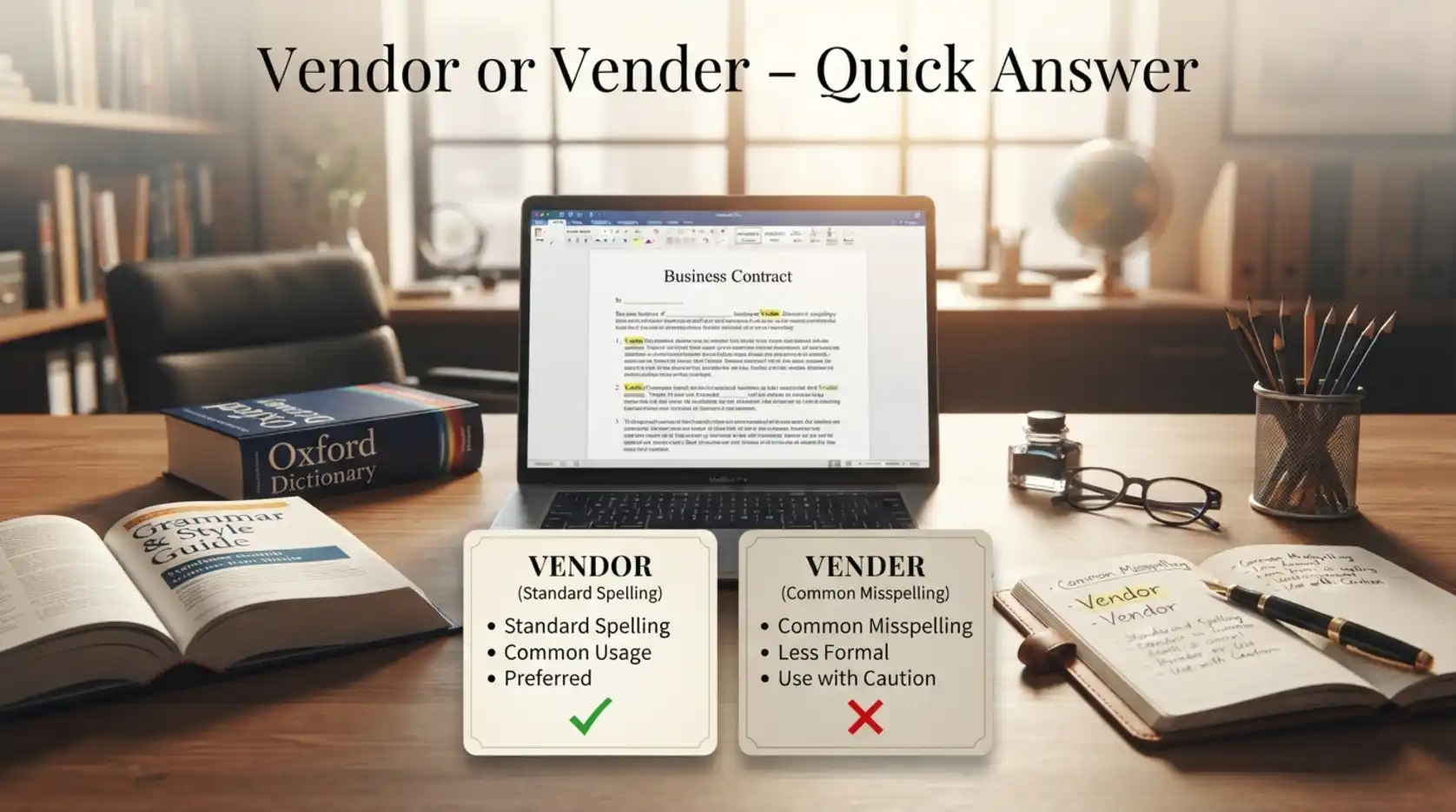
“Vendor” is the correct and standard spelling. Use it in all forms of writing—business, legal, casual, or academic.
“Vender” is a rare variant. Some dictionaries list it, but almost no professional writer uses it today.
Examples:
- The vendor delivered the supplies on time. ✅
- We signed a contract with a new vendor. ✅
- The vender delivered the supplies on time. ⚠️ (technically found in some dictionaries, but avoid it)
If you remember one thing from this article, remember this: when in doubt, write “vendor.”
The Origin of Vendor
The word comes from the Latin verb vendere, meaning “to sell.” From there, it passed into French as vendeur, and then into English.
English borrowed the “-or” ending from Latin agent nouns—words that describe someone who does something. Think of actor, editor, director, and investor. All of these follow the same “-or” pattern because they come from Latin roots.
“Vender,” with an “-er” ending, follows a different and more native English pattern. English has many “-er” agent nouns too, like baker, writer, and seller. Early English spelling wasn’t standardized, so both endings appeared in old texts. Over time, “vendor” won out and became the accepted standard.
This is why spelling differences exist: language history, borrowed roots, and inconsistent early spelling all shaped the words we use today.
British English vs American English Spelling
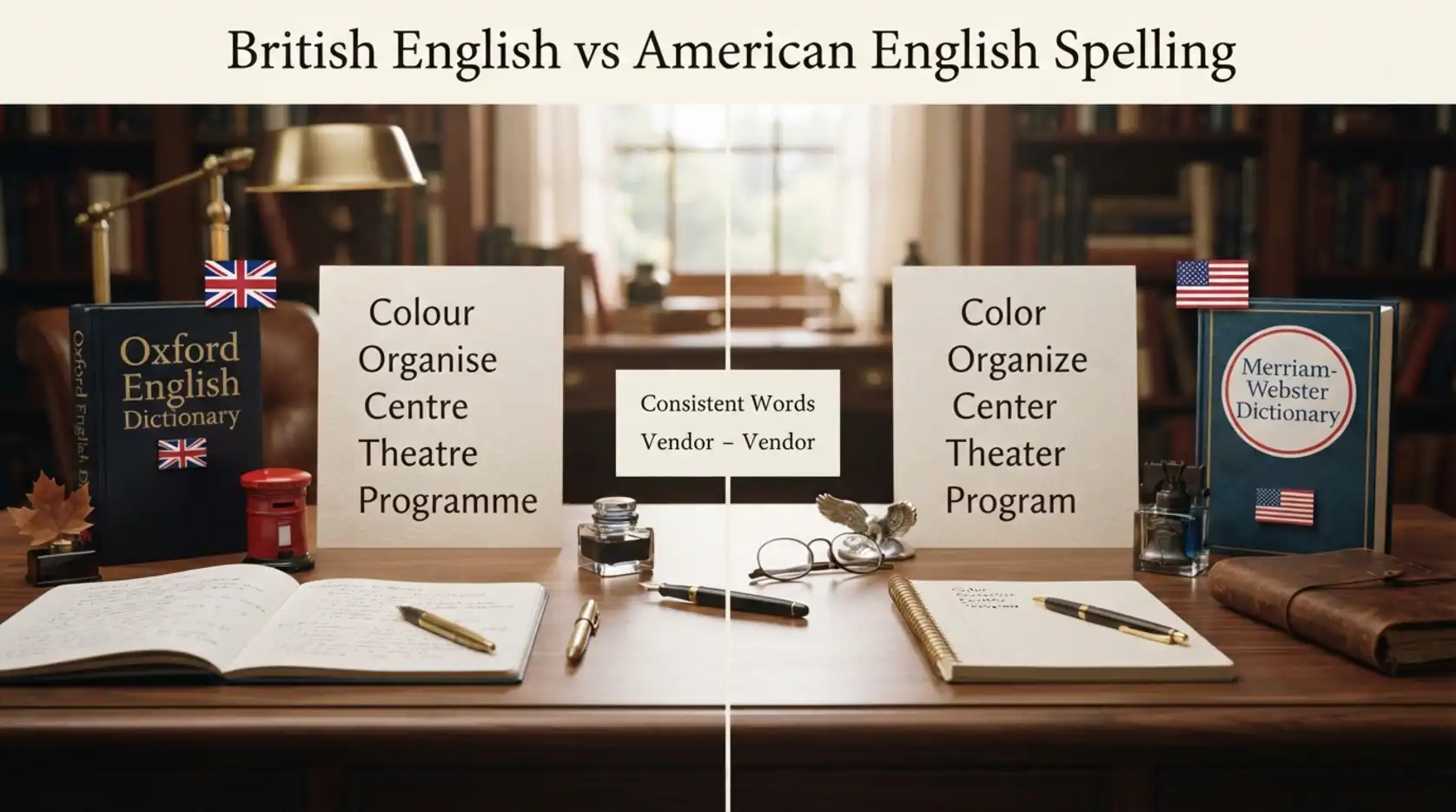
Here’s an important fact: this is not a British vs. American spelling difference. Both British and American English use “vendor” as the standard spelling.
This makes “vendor” different from true regional pairs like color/colour or organize/organise, where each spelling belongs to a specific region.
| Word Pair | American English | British English | Vendor/Vender? |
| Color / Colour | Color | Colour | Regional difference |
| Organize / Organise | Organize | Organise | Regional difference |
| Vendor / Vender | Vendor | Vendor | No regional difference — “vendor” everywhere |
So if you’re choosing based on region, that logic doesn’t apply here. “Vendor” is correct no matter where your audience lives.
Which Spelling Should You Use?
United States: Use “vendor.” This is the spelling in business documents, contracts, and everyday writing.
UK and Commonwealth countries (Canada, Australia, India, etc.): Use “vendor.” Style guides and dictionaries in these regions also treat “vendor” as standard.
Global or international audience: Use “vendor.” Since there’s no regional split, this spelling works everywhere and avoids confusion.
In short: there’s no audience where “vender” is the better choice. Stick with “vendor” across the board.
Common Mistakes with Vendor
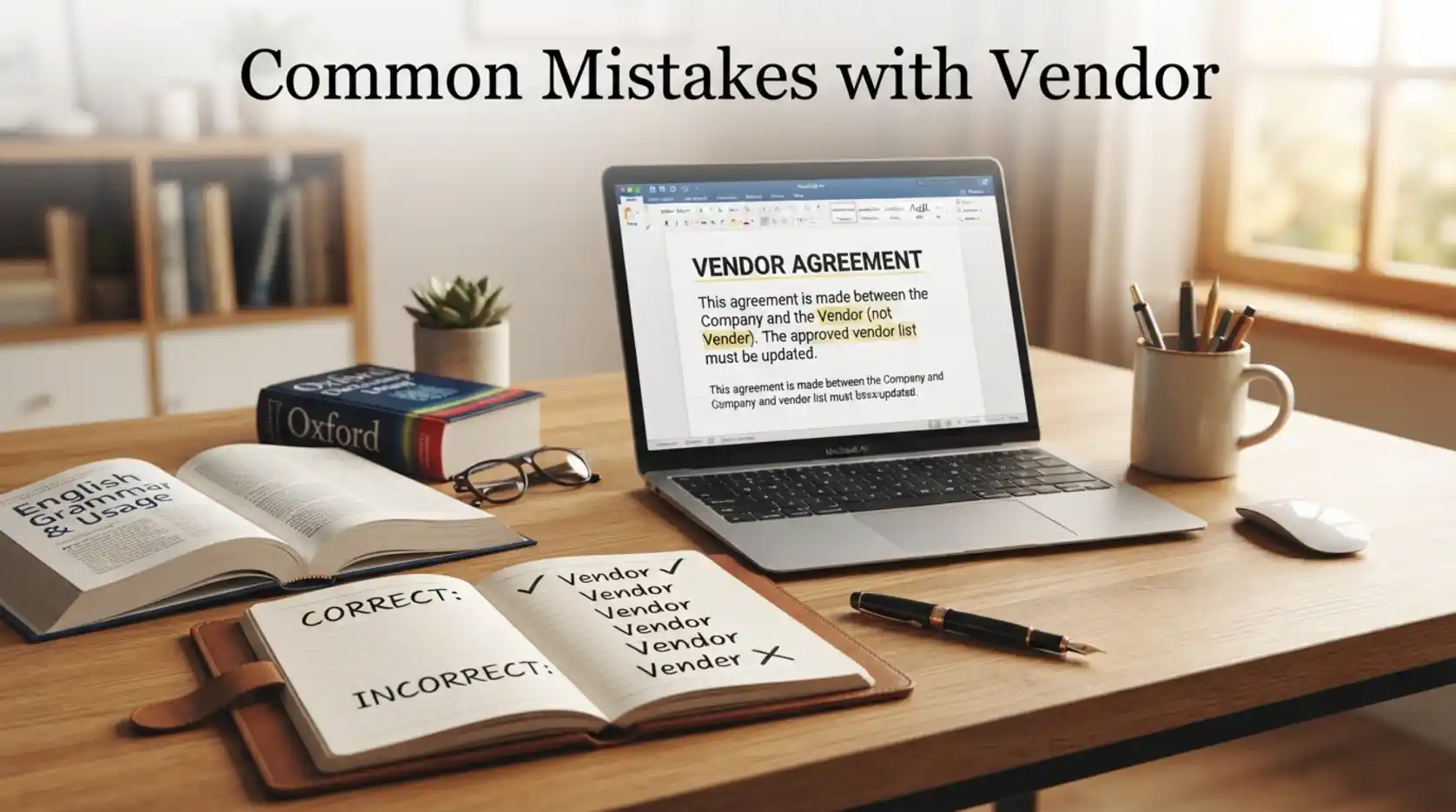
- Spelling it “vender” out of habit. Many people assume it follows the “-er” pattern like “seller.” It doesn’t.
- Confusing “vendor” with “vender” as a typo. Autocorrect sometimes lets “vender” slip through because it’s a real (if rare) word.
- Mixing it up with “vending.” “Vending machine” uses the “-ing” form correctly, but this doesn’t change the noun spelling to “vender.”
- Using “vender” in formal or legal writing. This can make contracts and business documents look less polished.
- Assuming it’s a US/UK spelling split. As shown above, it isn’t. Don’t switch spelling based on your audience’s country.
Vendor in Everyday Examples
Please check with the supplier and confirm the invoice number before Friday.
According to local sellers, weekend sales increased.
I found this amazing seller at the farmers market today. 🍅
Across all these contexts, “vendor” stays consistent. That consistency is exactly why it’s the safer, smarter choice.
Vendor – Google Trends & Usage Data
Search interest for “vendor” is far higher than “vender” across virtually every English-speaking country, including the US, UK, Canada, Australia, and India. “Vendor” dominates in business, e-commerce, and tech contexts—think phrases like “vendor management,” “vendor agreement,” and “third-party vendor.”
“Vender” does get some search volume, but it’s mostly from people unsure of the spelling, or from unrelated uses (in Spanish, vender means “to sell,” which adds some search overlap from bilingual users).
The takeaway: usage data confirms what dictionaries and style guides already say. “Vendor” is the dominant, professional standard.
Vendor vs Vender – Comparison Table
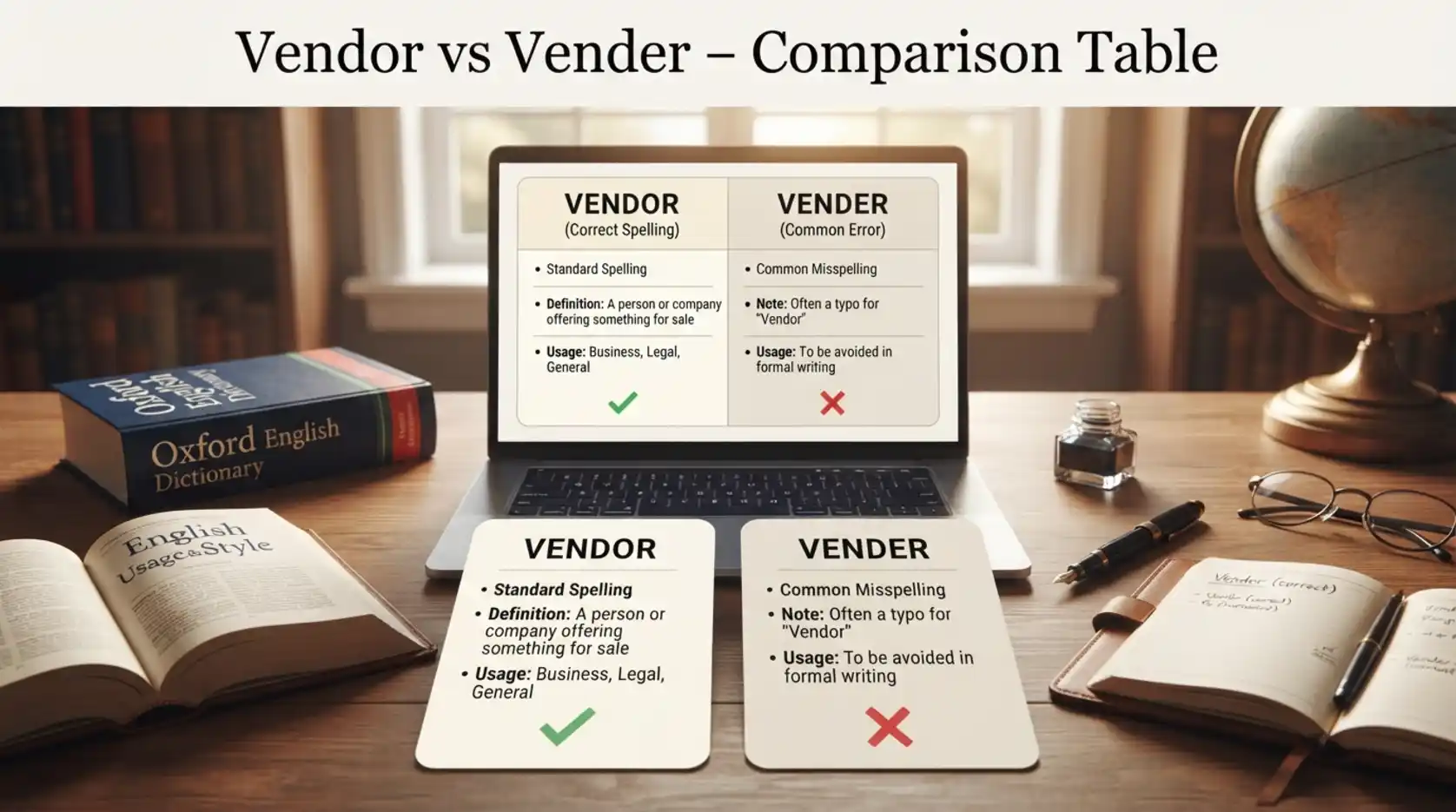
| Feature | Vendor | Vender |
| Standard spelling | ✅ Yes | ❌ No |
| Used in US English | ✅ Yes | Rarely |
| Used in UK English | ✅ Yes | Rarely |
| Found in major dictionaries | ✅ Yes | Listed as variant |
| Recommended for business/legal use | ✅ Yes | ❌ No |
| Common in Spanish (“to sell”) | N/A | Different language, same spelling |
FAQs
Is “vender” a real word?
Yes, some dictionaries list it as a rare variant spelling. But it’s not commonly used or recommended.
Is “vendor” American or British spelling?
Neither, specifically. “Vendor” is standard in both American and British English.
Why do people spell it “vender”?
Likely because of the common “-er” pattern in English (like seller, buyer), or confusion with the Spanish word vender (“to sell”).
Which spelling should I use in a contract?
Always use “vendor.” It’s the professional and legally standard spelling.
Does spell-check catch “vender” as wrong?
Not always. Since “vender” is a real word in some dictionaries, spell-check may not flag it, even though “vendor” is correct in this context.
Is “vending machine” related to this spelling confusion?
No. “Vending” is the correct form of the verb “to vend,” and it doesn’t affect how you spell the noun “vendor.”
Can I use “vender” in casual writing?
It’s best to avoid it, even casually. Using “vendor” consistently builds a stronger writing habit and avoids mistakes in formal contexts later.
Conclusion
The debate between “vendor” and “vender” has a simple resolution: “vendor” is correct, and it’s used the same way in American, British, and global English. Unlike true regional spelling pairs, this isn’t a case of choosing based on your audience’s country.
“Vendor” traces back to Latin roots and follows the same pattern as words like actor and editor. “Vender,” while technically listed in some dictionaries, is a rare variant that professional writers should avoid.
If you’re drafting a business contract, writing a news article, or posting on social media, “vendor” is the safe, consistent, and professional choice. Skip the second-guessing—just remember the “-or” ending, and you’ll always spell it right.