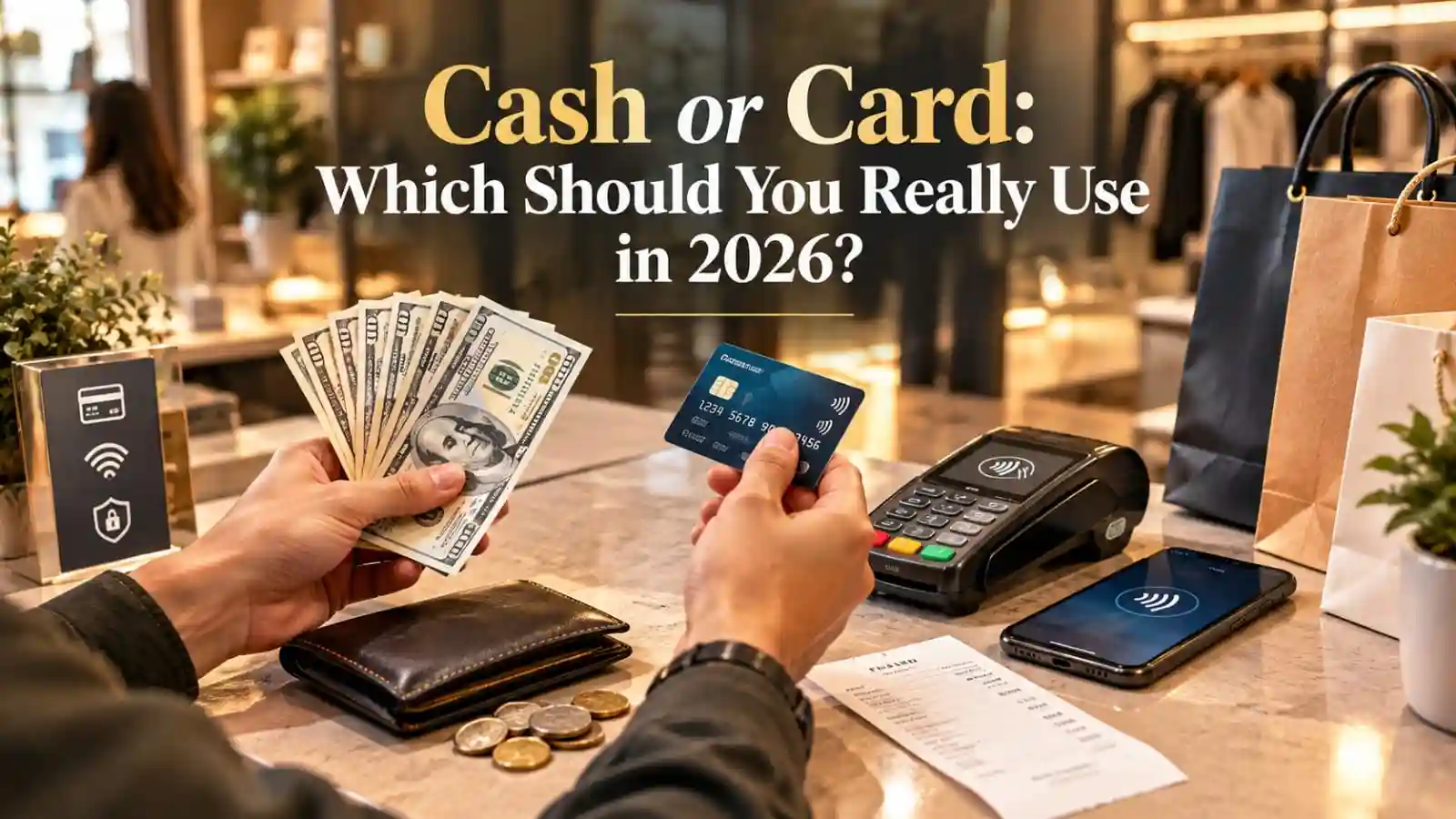
You’re standing at the checkout. The cashier asks, “Cash or card?” It’s a simple question, but it triggers a small decision every time. Do you tap your card for the points? Or hand over cash to avoid fees and stay on budget?
This is why so many people search “cash or card” online. They’re not confused about spelling — they’re confused about which option actually makes more sense. Card payments feel fast and modern. Cash feels safer and simpler. Both have real trade-offs: fees, fraud risk, budgeting habits, and even how merchants price their goods.
This article gives you the short answer first, then the full picture. You’ll learn where the habit of choosing cash or card came from, how preferences differ by country, common mistakes people make with each method, and what the data says about which one is winning. By the end, you’ll know exactly which to reach for — and why.
Cash or Card – Quick Answer
Use cash for small daily purchases, tipping, budgeting, and places that charge card fees.
Use card for big purchases, online shopping, travel, and anywhere you want purchase protection or rewards.
Example: Paying $4 for coffee → cash keeps it simple and fee-free. Paying $400 for a flight → card gives you protection if something goes wrong.
Most experts suggest a mix: cash for control, card for convenience and safety.
The Origin of “Cash or Card”
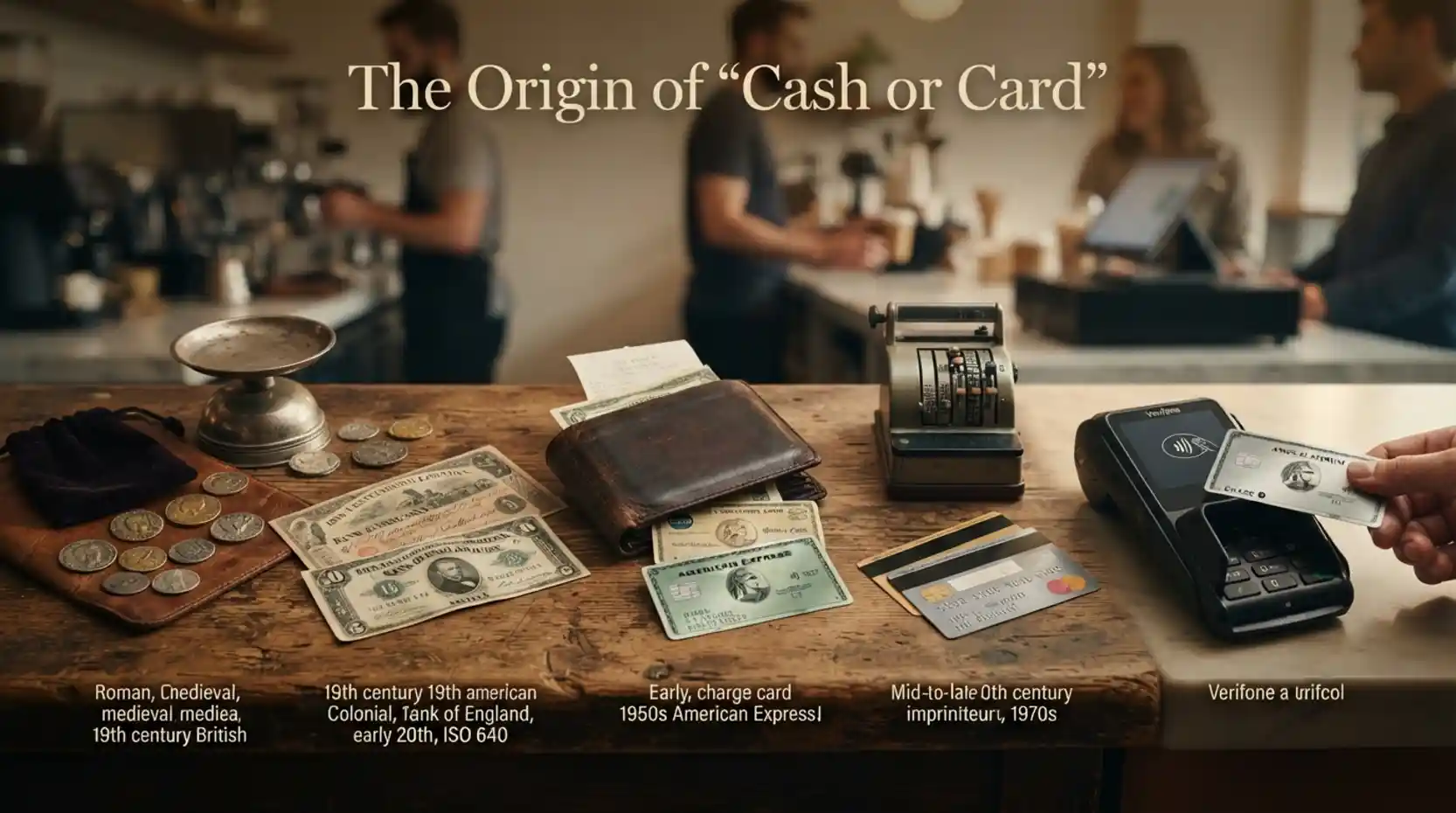
Cash is old. Coins and paper money have existed for thousands of years. Cards are new. The first bank charge card appeared in the 1950s. Credit cards went mainstream in the 1970s and 1980s. Debit cards followed soon after, linking spending directly to a bank account.
The phrase “cash or card?” became common once card machines spread to nearly every store. Before that, cashiers didn’t need to ask — cash was the only option. Today the phrase is asked at checkouts worldwide, but the answer people give depends heavily on where they live.
Cash or Card: Regional Habits (US vs UK vs Global)
Payment habits differ by country, much like spelling differs between American and British English. Here’s how the “cash or card” question plays out around the world.
| Region | Common Habit | Why |
| United States | Card-heavy, credit cards common | Rewards points, credit-building culture |
| United Kingdom | Contactless card, “chip and PIN” | Fast checkout, low card fees |
| Germany | Cash still strong | Privacy concerns, budgeting culture |
| Japan | Cash-heavy, cards growing | Trust in physical currency |
| Sweden | Near-cashless | Strong digital payment infrastructure |
Small daily differences also show up in wording: Americans say “cash or credit,” while British speakers say “cash or card.”
Which Should You Use?
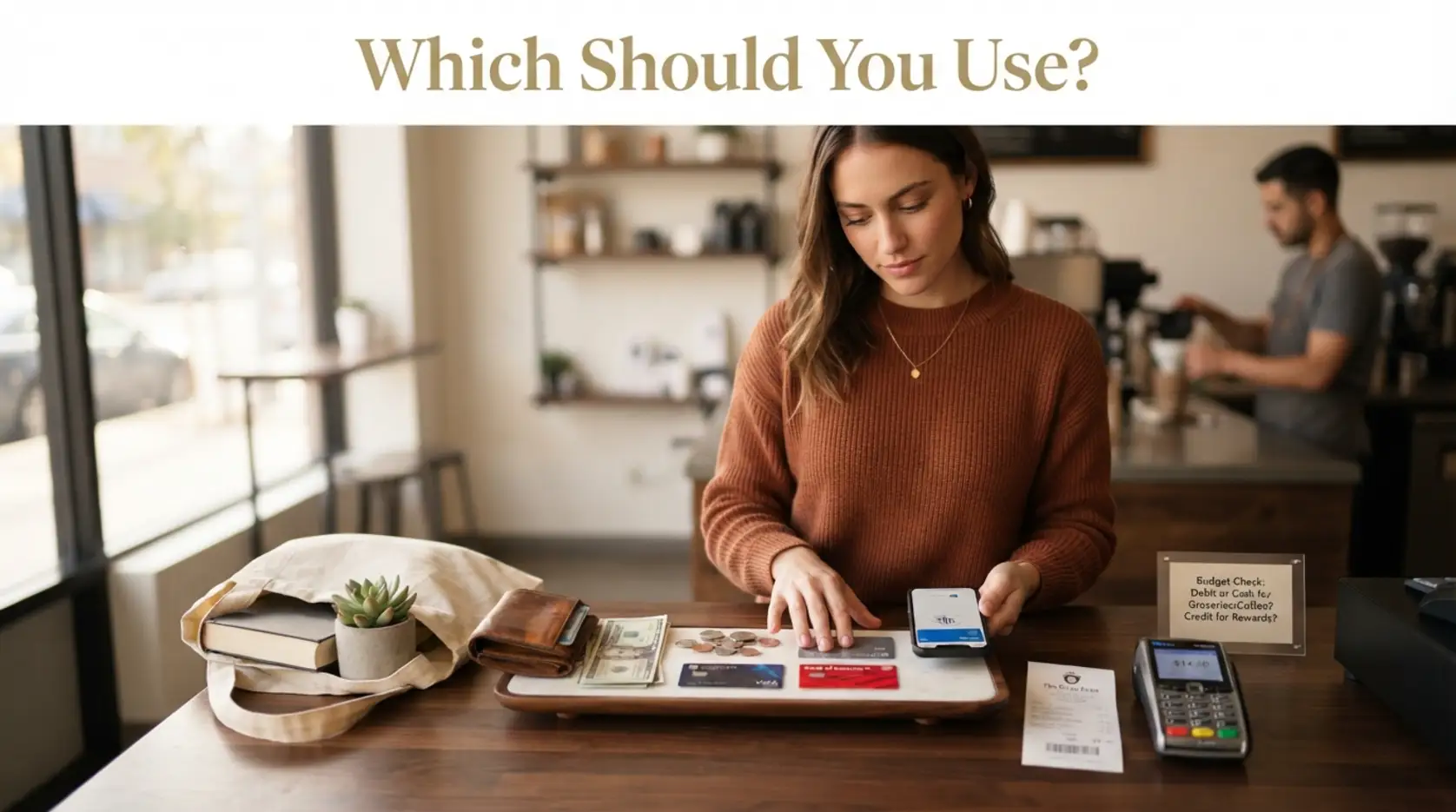
- For US shoppers: Card is common, but keep cash for tipping and small vendors who avoid card fees.
- For UK and Commonwealth shoppers: Contactless card is standard, but carry cash for markets, small shops, and emergencies.
- For global travelers: Always carry some local cash. Cards can fail abroad due to network issues or foreign transaction fees.
- For budgeters: Cash makes overspending harder because you can see and feel the money leave your hand.
- For safety-focused users: Card offers fraud protection that cash cannot.
Common Mistakes with Cash or Card
- Carrying only card, no backup cash — a network outage or small vendor can leave you stuck.
- Using credit like debit — spending money you don’t have leads to debt.
- Ignoring card fees — some merchants add a surcharge for card use.
- Not tracking cash spending — cash is easy to lose track of without a system.
- Assuming cash is always safer — cash can be lost or stolen with no way to recover it.
Cash or Card in Everyday Examples
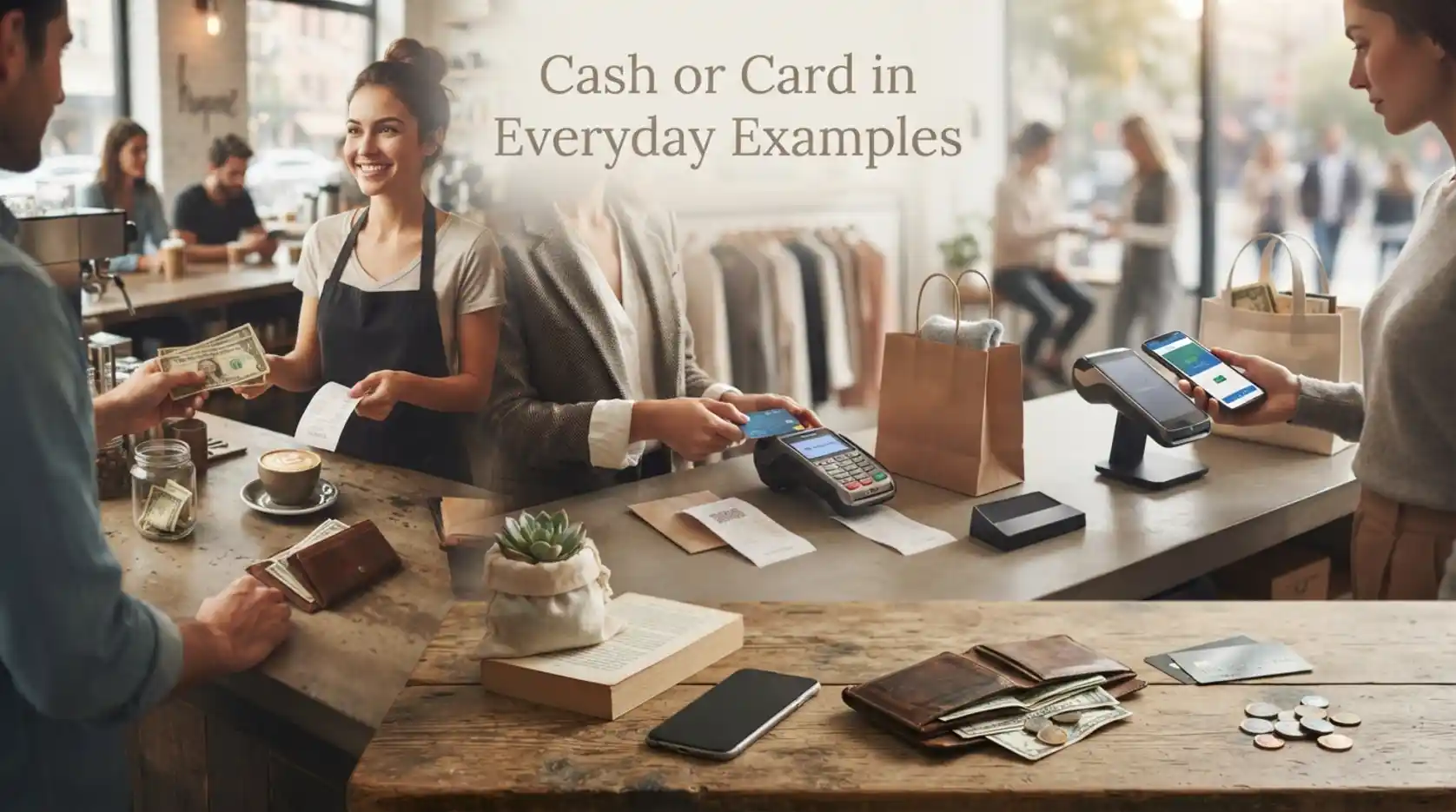
- Email: “Please confirm if the client prefers cash or card for the event booth.”
- News headline: “Cash or card? Why more shoppers are going digital in 2026.”
- Social media: “Cash or card for splitting the bill tonight? 😂”
- Formal writing: “The survey measured consumer preference for cash or card as a primary payment method.”
Cash or Card – Google Trends & Usage Data
Search interest in “cash or card” tends to spike around holidays, travel season, and news stories about inflation or bank fees. Countries with strong digital payment systems, like Sweden and South Korea, show declining cash searches. Countries with cash-based traditions, like Germany and Japan, show steadier interest in the topic. In the US, searches often pair with “credit card rewards” and “cashback,” showing that card decisions are tied to financial strategy, not just convenience.
Comparison Table: Payment Method Variations
| Method | Best For | Main Risk |
| Cash | Small purchases, tipping, budgeting | Loss or theft |
| Debit Card | Everyday spending, no debt risk | Bank account tied directly to fraud |
| Credit Card | Big purchases, travel, rewards | Overspending, interest charges |
| Contactless/Mobile Pay | Speed, convenience | Requires working device/network |
FAQs
1. Is cash or card better for budgeting?
Cash. You physically see the money leave, which naturally limits overspending.
2. Is it safer to use cash or card while traveling?
Card, generally. Most cards offer fraud protection and can be canceled if lost. Still carry some local cash as backup.
3. Do stores prefer cash or card?
It depends. Large stores prefer card for speed and record-keeping. Small vendors often prefer cash to avoid processing fees.
4. Why do some places charge extra for card payments?
Card networks charge merchants a small fee per transaction. Some businesses pass this cost to the customer.
5. Is cash disappearing?
Not entirely. Cash use is falling in some countries, like Sweden, but remains strong in others, like Germany and Japan.
6. Can I build credit using only cash?
No. Building credit history requires using credit products, such as a credit card, responsibly over time.
7. What should I carry as a tourist — cash or card?
Both. Use card for major purchases and hotel bookings. Carry cash for markets, tips, and places with limited card access.
Conclusion
There’s no single right answer to “cash or card” — the best choice depends on the situation. Cash gives you control, privacy, and a built-in budgeting check. Card gives you safety, convenience, and rewards, especially for large or online purchases.
The smartest approach is a mix. Keep cash on hand for small daily spending, tipping, and emergencies. Use card for bigger purchases, travel, and anything where fraud protection matters. Pay attention to card fees, and never treat credit like free money.
Payment habits also shift by country, so if you travel, adjust your approach to match local norms. If you’re budgeting at home or navigating checkout abroad, understanding the trade-offs of cash and card helps you spend smarter, not just faster.