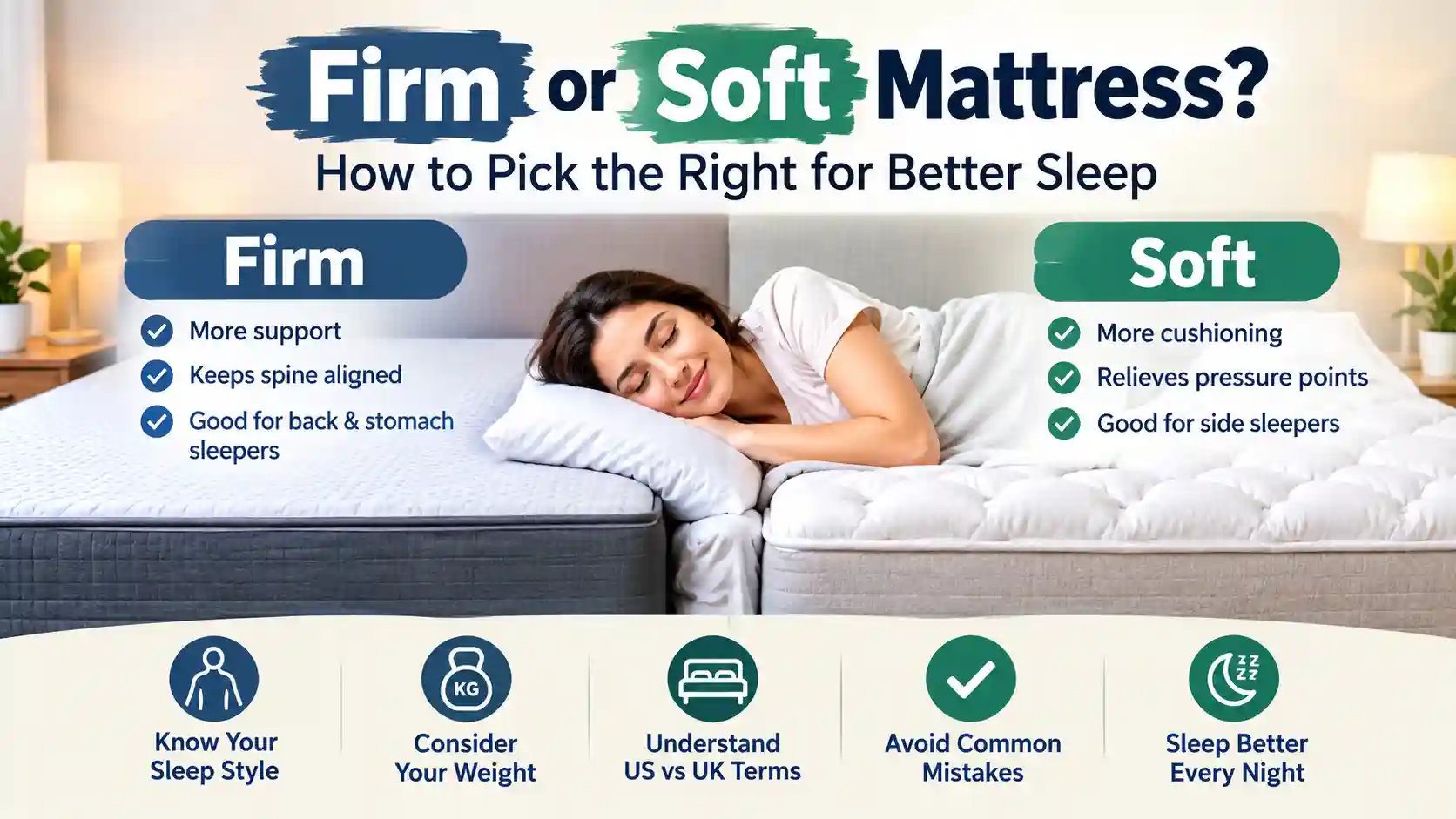
You lie down on a new bed. Is it too hard? Too squishy? Millions of people ask the same thing every month: firm or soft mattress? It sounds like a small choice. It is not. The wrong feel can mean sore hips, a stiff back, and bad sleep. The right feel can change your mornings.
People search this phrase because shops use many words. One brand says “plush.” Another says “medium-firm.” A third gives a number from 1 to 10. Friends give mixed advice. Online reviews disagree. So you get stuck.
This guide clears the fog. You get a quick answer first. Then you will see where the firmness idea came from, how the US and UK describe it, and which mistakes to avoid. You will also find real examples, search trends, a comparison table, and an FAQ. By the end, you will know how to choose with confidence.
Firm or Soft Mattress – Quick Answer
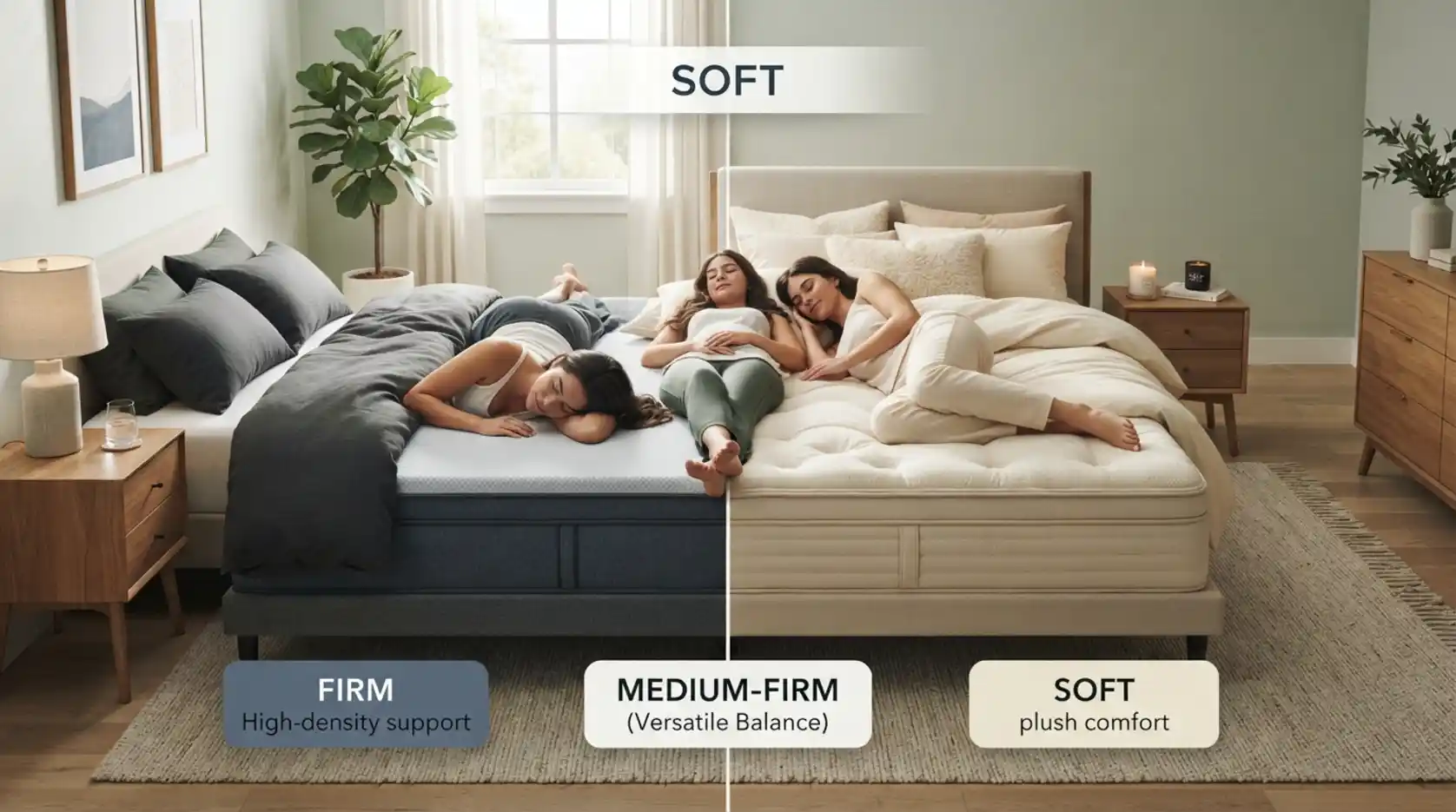
Most people sleep best on a medium-firm mattress. It is the safe middle. It holds your spine straight and still feels kind to your body.
Here is the short rule:
- Back sleepers: Choose medium-firm to firm.
- Stomach sleepers: Choose firm. A soft bed lets your hips sink and bends your back.
- Side sleepers: Choose soft to medium. Your shoulders and hips need room to sink.
- Heavier bodies (over about 230 lbs / 105 kg): Choose firmer. You sink deeper.
- Lighter bodies (under about 130 lbs / 60 kg): Choose softer. You sink less.
Example: Sam sleeps on his side and weighs 140 lbs. A medium-soft bed will likely feel best. Dana sleeps on her stomach and weighs 200 lbs. A firm bed will likely suit her.
The Origin of the Firm vs Soft Mattress Debate
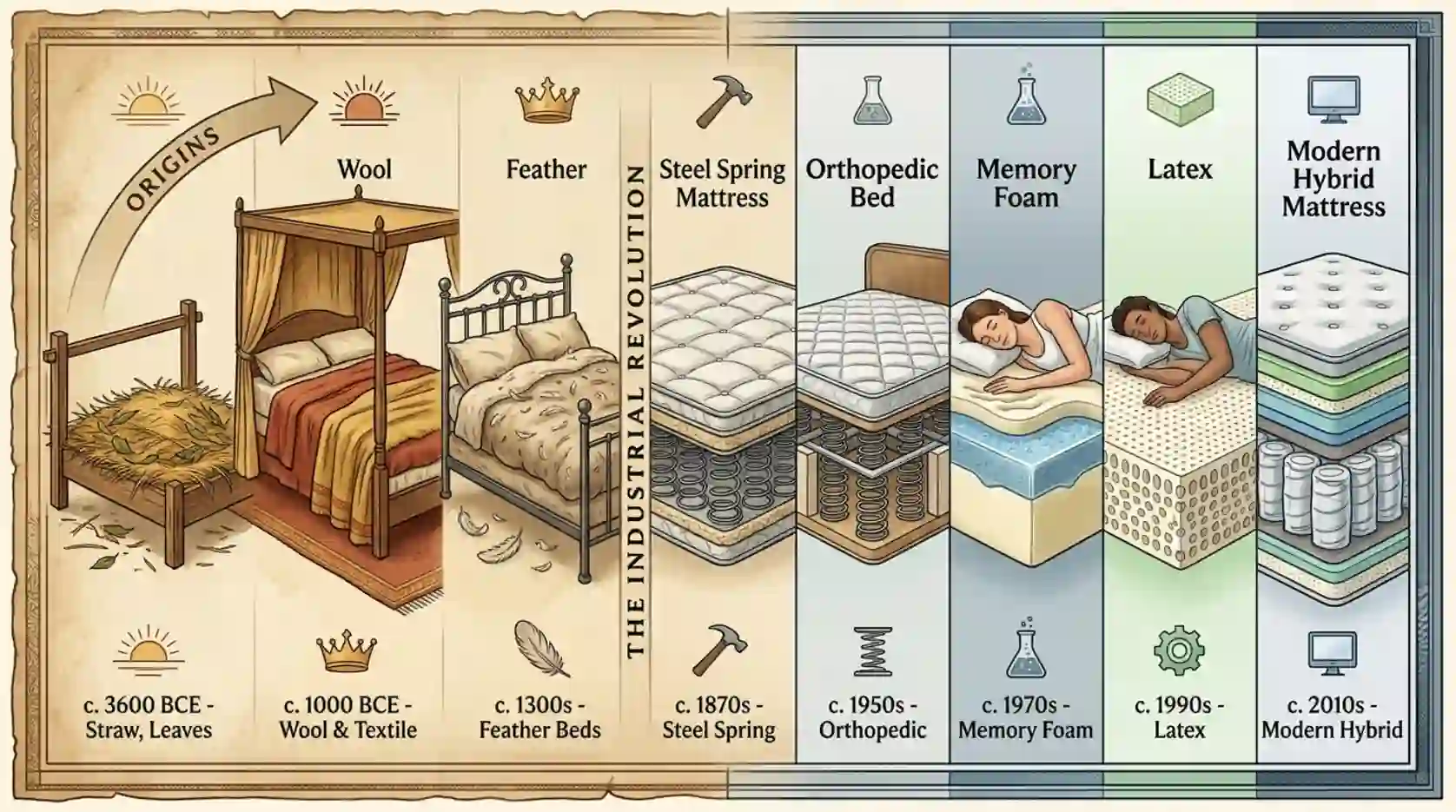
For most of history, people slept on what they had: straw, leaves, wool, or feathers. Beds were soft by default. Then, in the 1800s, coiled steel springs arrived. Beds became bouncier and more even.
In the 20th century, the idea of a “hard bed for a healthy back” took hold. Some doctors told patients to sleep on very hard surfaces. Brands soon sold “orthopedic” mattresses. Firm became a sign of good health.
Later research changed that view. Studies found that a medium-firm bed often helps people with lower back pain more than a very hard one. Then memory foam and latex came along. They allowed soft surfaces that still give support. This is why shops now talk about comfort layers (the soft top) and support layers (the firm base).
The words “firm” and “soft” are old English words. They describe touch and pressure. Brands had no shared standard, so each one made up its own scale. That is why the same bed can be called “firm” in one shop and “medium” in another.
US vs UK Firmness Terms
Firmness is not a spelling issue. But the way regions describe it does differ.
| Feature | United States | United Kingdom / Commonwealth |
| Common scale | 1–10 firmness scale | Soft, medium, firm, or a 1–5 tension rating |
| Popular term | “Medium-firm” (about 6–7) | “Medium” or “medium-firm” |
| Word for the soft top | Pillow top, plush | Pillow top, comfort layer |
| Common type | Memory foam, hybrid, innerspring | Pocket spring, memory foam, hybrid |
| Bed sizes | Twin, Full, Queen, King | Single, Double, King, Super King |
| Trial periods | Often 100 nights or more | Often 100 nights, sometimes less |
| Spelling quirk | “Mattress” (same in both) | “Mattress” (same in both) |
Key point: The word mattress is spelled the same in both places. What changes is the scale and the size names. Always check how the brand defines its own numbers.
Which Option Should You Choose?
Pick by your body and sleep style first. Then think about where you shop.
If you shop in the US: Use the 1–10 scale. Most people do well at 5 to 7. Read the brand’s own chart, because a “6” at one brand can feel like a “7” at another.
If you shop in the UK or Commonwealth: Look for soft, medium, or firm labels. Check the tension rating if the brand gives one. Test in store when you can.
If you shop online from anywhere: Choose a brand with a long trial and free returns. Your body is the final judge.
Quick decision guide:
- Do you have lower back pain? Try medium-firm.
- Do you wake with sore shoulders or hips? Try a softer top layer.
- Do you share a bed? Look for medium. It is the best compromise.
- Do you sleep hot? Choose breathable materials, whatever the firmness.
Common Mistakes When Choosing Between a Firm or Soft Mattress
Mistake 1: Thinking firmer is always healthier.
Fix: A very hard bed can press on your hips and shoulders. Aim for support and comfort.
Mistake 2: Choosing by the showroom test alone.
Fix: Ten minutes in a shop is not a full night. Use the trial period.
Mistake 3: Ignoring your sleep position.
Fix: Side, back, and stomach sleepers need different feels.
Mistake 4: Ignoring your weight.
Fix: Heavier people sink more, so the same bed feels softer to them.
Mistake 5: Mixing up firmness and support.
Fix: Firmness is how the surface feels. Support is how well the bed holds your spine. A soft bed can still be supportive.
Mistake 6: Buying on the number alone.
Fix: Brands rate firmness differently. Read reviews from people with your body type.
Mistake 7: Keeping an old, sagging mattress.
Fix: A bed that sags feels soft but gives no support. Most beds last 7 to 10 years.
Firm or Soft Mattress in Everyday Examples
In an email to a store:
“Hi, I sleep on my side and have shoulder pain. Is the Cloud model a soft or medium-firm mattress? Do you offer a 100-night trial?”
In a news or review headline:
“Firm or Soft Mattress? Sleep Experts Say Medium-Firm Wins for Most People”
On social media:
“Just got a new bed. Went soft and my back is killing me. Should have gone firm! 😩”
In a forum post:
“Couple here. He likes firm, I like soft. Any tips for a mattress we can both live with?” (A common answer: medium-firm, or a split-firmness bed.)
In formal writing (a product guide):
“Medium-firm mattresses balance pressure relief and spinal alignment. They are suitable for the majority of adult sleepers.”
Firm or Soft Mattress – Google Trends & Usage Data

I can’t pull live Google Trends numbers here, so I won’t invent figures. Check the current data yourself at trends.google.com. Searches like this tend to follow a few patterns:
- Seasonal peaks: Mattress searches often rise around big sale periods, such as Black Friday, Labor Day, and New Year sales.
- Country patterns: The US shows high volume for “firm vs soft mattress” and “best mattress for back pain.” The UK, Canada, Australia, and India also search for it, often with local size names.
- Context patterns: People add their own needs to the search. Common add-ons are “for side sleepers,” “for back pain,” “for heavy people,” and “for couples.”
- Related searches: “Medium-firm mattress,” “mattress firmness scale,” and “how to choose a mattress.”
Tip: In Google Trends, compare “firm mattress,” “soft mattress,” and “medium firm mattress” by country and by date range.
Comparison Table: Firm vs Soft vs Medium-Firm
| Feature | Soft | Medium-Firm | Firm |
| Typical scale (US) | 3–4 | 6–7 | 8–9 |
| Feel | Deep hug, sinks in | Balanced, gentle support | Flat, little sink |
| Best for | Side sleepers, lighter bodies | Most people, back sleepers, couples | Stomach sleepers, heavier bodies |
| Pressure relief | High | Medium to high | Low to medium |
| Spine support | Lower | High | High |
| Risk if wrong | Back sags, hips sink too far | Few risks for most people | Sore shoulders and hips |
| Common materials | Memory foam, plush foam | Hybrid, latex, mixed foam | Innerspring, dense foam |
FAQs
1. Is a firm or soft mattress better for back pain?
Most studies and sleep experts point to medium-firm. It supports the spine without causing pressure points. Very soft and very hard beds both can make pain worse. See a doctor if your pain is severe or lasts long.
2. Is a firm or soft mattress better for side sleepers?
Soft to medium. Side sleepers need their shoulders and hips to sink a little, so the spine stays in a straight line.
3. Is a firm or soft mattress better for stomach sleepers?
Firm. A soft bed lets the belly and hips sink, which bends the lower back.
4. What is the most popular mattress firmness?
Medium-firm, around 6 to 7 on a 10-point scale. It works for the widest range of people.
5. Does body weight change how firm a mattress feels?
Yes. Heavier people sink deeper, so a bed feels softer to them. Lighter people sink less, so the same bed feels firmer.
6. Can I make a firm mattress softer?
Yes. Add a mattress topper made of memory foam, latex, or wool. This is cheaper than buying a new bed.
7. What if my partner and I like different firmness levels?
Choose a medium-firm bed as a middle ground. You can also buy a bed with split firmness or an adjustable air bed.
8. How long does it take to adjust to a new mattress?
Often 2 to 4 weeks. Your body needs time to adapt. Use the trial period to decide.
Conclusion
So, firm or soft mattress? For most people, the best answer is medium-firm. It gives support for your spine and comfort for your joints. It is the safest place to start.
Remember the key points. Back sleepers do well with medium-firm to firm. Stomach sleepers need firm. Side sleepers like soft to medium. Your weight matters too, because heavier bodies sink more. Do not trust the label alone. A “firm” bed from one brand can feel like “medium” from another.
Avoid the common traps. Do not think harder always means healthier, Do not judge a bed after ten minutes in a shop. Do not keep an old, sagging mattress.
Most of all, use the trial period. Sleep on the bed for at least a few weeks. Your body will tell you the truth. If you still wake up sore, swap it, add a topper, or try a different firmness. A good mattress is worth the effort, because you spend about a third of your life on it.