You bite into a cold, sweet slice of watermelon on a hot day. It tastes like fruit. Then a friend says, “Actually, it’s a vegetable.” Now you are not sure.
You are not alone. Every year, people type “watermelon fruit or vegetable” into Google. They want a quick answer. They also want to know why the debate exists at all.
The confusion comes from two ways of sorting food. Scientists sort plants by how they grow. Cooks sort plants by how they taste and how we eat them. These two systems do not always agree. Watermelon sits right in the middle of that gap.
Some people also wonder about the spelling. Is it “watermelon” or “water melon”? Does it change in British and American English?
This article gives you the short answer first. Then it explains the history, the spelling, common mistakes, and real examples. By the end, you will know exactly what to say and write.
Watermelon Fruit or Vegetable – Quick Answer
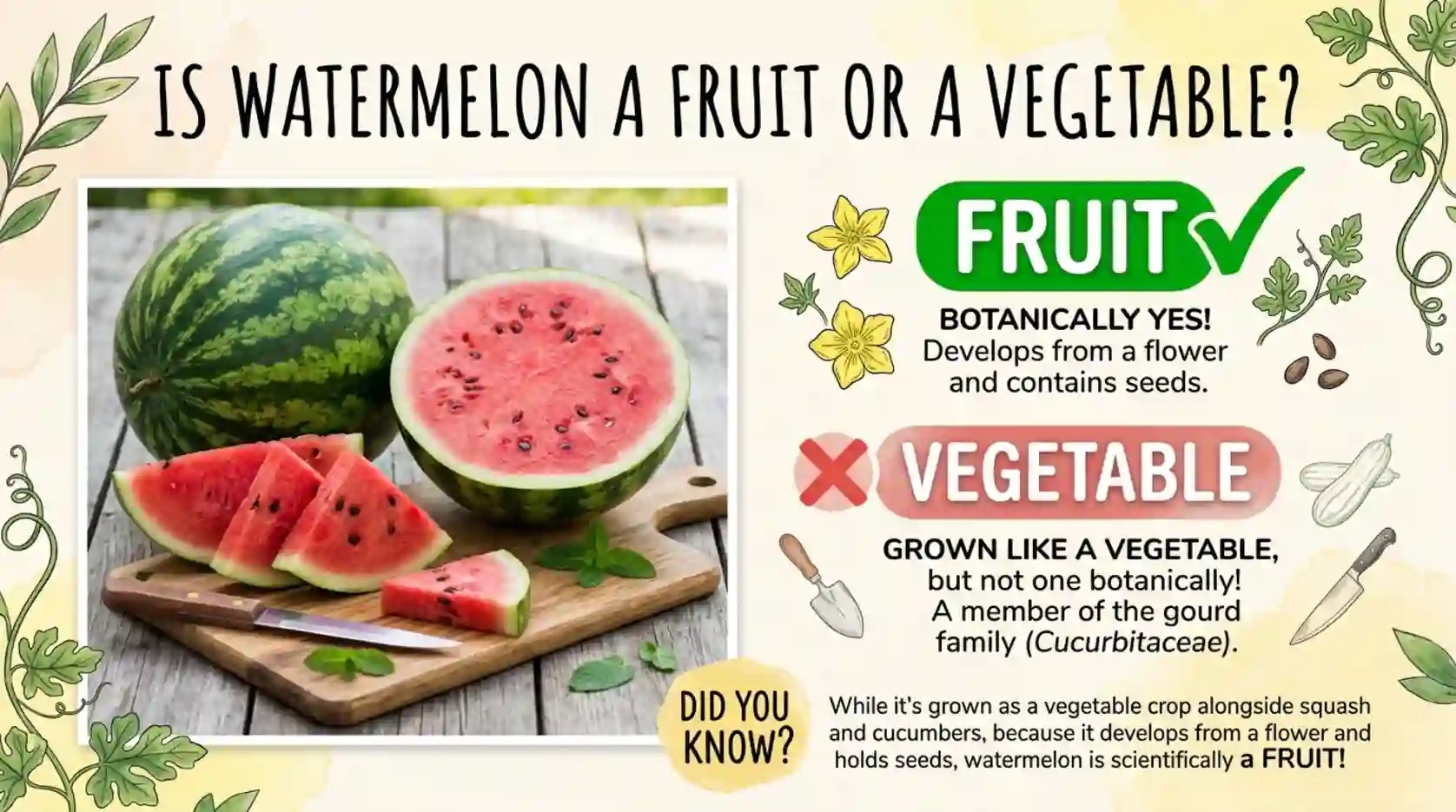
Watermelon is a fruit. That is the answer in science and in the kitchen.
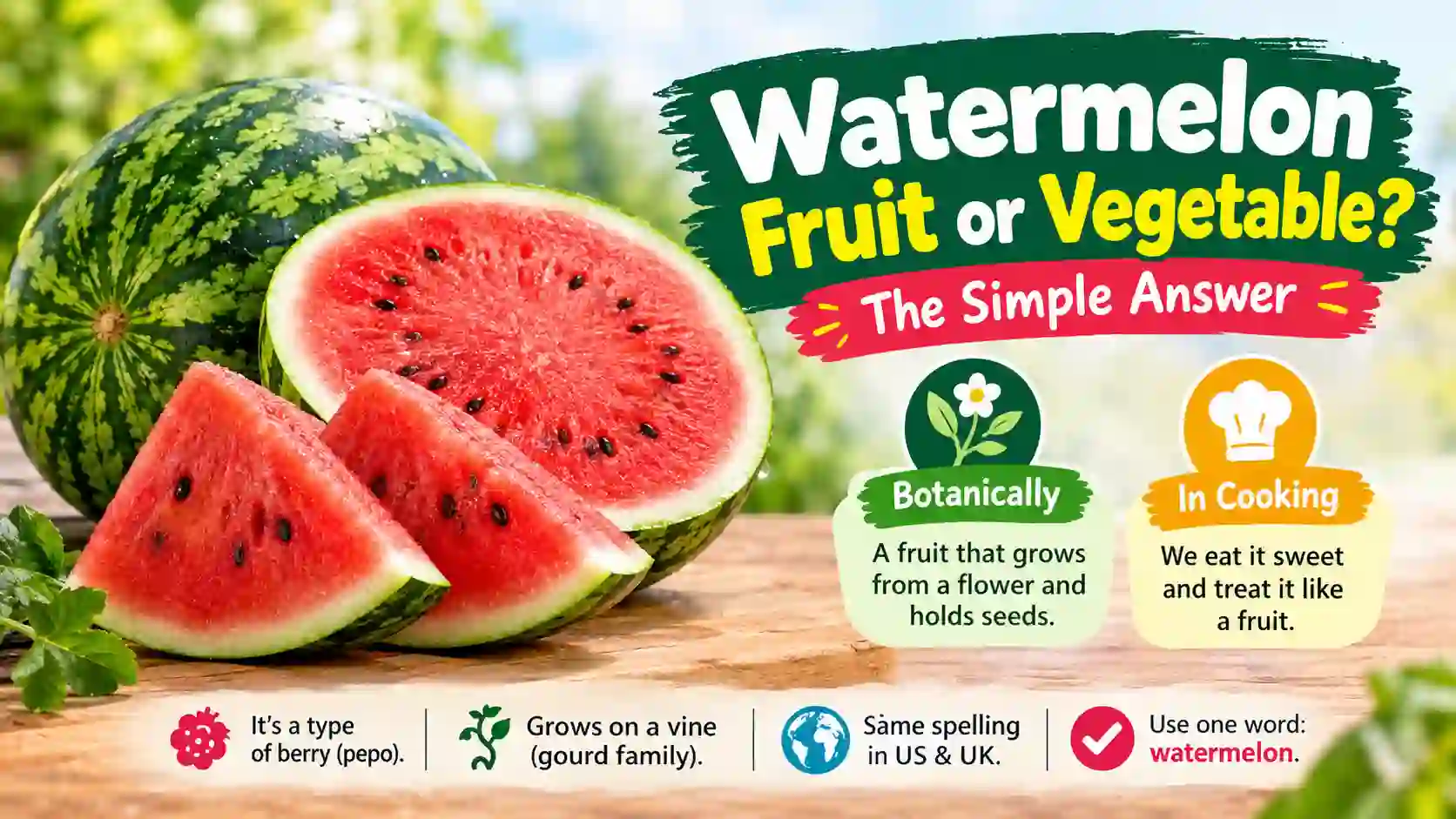
- Botanically: A fruit grows from a flower and holds seeds. Watermelon does both. It is a type of berry called a pepo.
- In cooking: We eat it sweet, often as a dessert or snack. That is how we treat fruit.
So why does the “vegetable” idea exist? Watermelon grows on a vine and belongs to the gourd family. Its relatives include cucumber, pumpkin, and squash. Cooks often call those vegetables. In 2007, the U.S. state of Oklahoma even named watermelon its official state vegetable. That choice is the main reason the joke spread.
Examples:
- Tomato: a fruit in science, a vegetable in cooking.
- Watermelon: a fruit in science, a fruit in cooking.
- Cucumber: a fruit in science, a vegetable in cooking.
The Origin of “Watermelon”
The plant is very old. Its scientific name is Citrullus lanatus. It began in Africa. People grew it in ancient Egypt about 4,000 years ago. Seeds have been found in old tombs.
The word is simple. “Water” points to the juicy flesh, which is about 92% water. “Melon” comes from the Old French melon. That word comes from Latin and Greek words meaning “apple-gourd.” English writers began using “watermelon” in the early 1600s.
Why do spelling differences exist? Here, they mostly do not. English first wrote it as two words or with a hyphen: “water melon” or “water-melon.” Over time, people joined them into one word. This is common in English. Words like “sunflower” and “football” went the same way.
British English vs American English Spelling
Good news: watermelon is spelled the same in both. There is no “watermelone” or “watermelour.” British and American spelling differ in words like colour/color and centre/center. Watermelon is not one of them.
The real differences are in how people write the word, not in regional rules.
| Form | US English | UK English | Correct? |
| watermelon | Yes | Yes | ✅ Standard |
| water melon | Rare | Rare | ❌ Avoid |
| water-melon | Very rare | Very rare | ❌ Old style |
| watermelons (plural) | Yes | Yes | ✅ Standard |
| Watermelon (start of sentence) | Yes | Yes | ✅ Capital only at the start |
Compare this with real spelling splits:
| Word | American | British |
| Color | color | colour |
| Flavor | flavor | flavour |
| Watermelon | watermelon | watermelon |
Which Spelling Should You Use?
Use “watermelon” everywhere. It is one word, all lowercase unless it starts a sentence.
- US readers: “watermelon.”
- UK and Commonwealth readers (Australia, Canada, India, Pakistan, South Africa): “watermelon.” Nothing changes.
- Global audiences: “watermelon.” Search engines, dictionaries, and style guides all agree.
If you write “fruit or vegetable” in the same piece, keep your other words consistent with your audience. Use “flavour” for UK readers and “flavor” for US readers. The word watermelon itself stays the same.
Pro tip for writers and SEO: Search tools understand “watermelon” best. Do not split it into two words in titles or headings.
Common Mistakes with “Watermelon Fruit or Vegetable”
1. Spelling it as two words.
❌ “I love water melon.”
✅ “I love watermelon.”
2. Saying it is a vegetable because it grows on a vine.
Many fruits grow on vines, like grapes. Growing style does not decide the category.
3. Mixing up botanical and cooking rules.
Both systems are valid. They answer different questions. Say which one you mean.
4. Believing the Oklahoma law changed the science.
It did not. It was a state choice, not a scientific one.
5. Calling it a melon without care.
Watermelon is related to melons, but it is a different plant. Cantaloupe is Cucumis melo. Watermelon is Citrullus lanatus.
6. Adding a capital letter.
❌ “Watermelon is My favorite.”
✅ “Watermelon is my favorite.”
“Watermelon Fruit or Vegetable” in Everyday Examples
Email:
“Hi team, we’ll serve fresh watermelon at Friday’s picnic. Please tell me about any food allergies.”
News headline:
“Is Watermelon a Fruit or a Vegetable? Experts Explain the Surprising Answer”
Social media:
“Hot take: watermelon is a fruit AND a berry. 🍉 Fight me.”
Formal writing:
“Botanically, watermelon (Citrullus lanatus) is classified as a fruit, specifically a pepo, a type of berry.”
School or quiz:
“Question: Is watermelon a fruit or a vegetable? Answer: A fruit.”
“Watermelon Fruit or Vegetable” – Google Trends & Usage Data
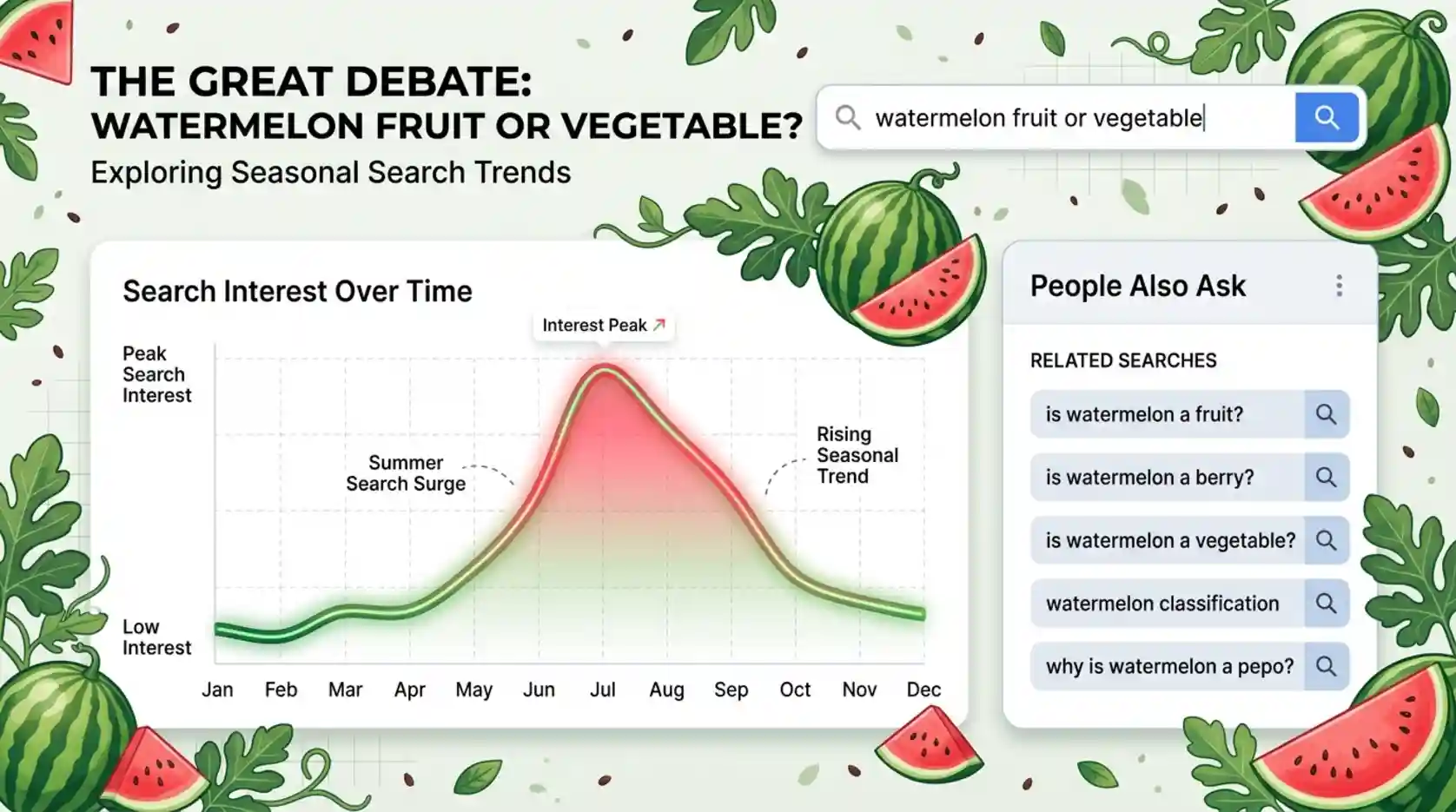
I can’t pull live Google Trends numbers here, so I won’t invent figures. Check Google Trends for exact data. Here is what the pattern usually looks like.
- Seasonal peaks: Searches rise in summer. Watermelon season brings picnics, recipes, and food debates.
- Where interest is high: The United States, India, Pakistan, the UK, Canada, and Australia often search this topic. Those are English-speaking or large food-loving markets.
- Why people search: Trivia, school homework, diet questions, and social media debates.
- Related searches: “Is watermelon a berry?”, “Is tomato a fruit?”, “Is cucumber a fruit?”
Tip: Compare “watermelon fruit or vegetable” with “is watermelon a fruit” in Google Trends. The second phrase usually has more searches, so use both in your headings.
| Search Phrase | Common Intent |
| watermelon fruit or vegetable | Quick fact check |
| is watermelon a fruit | Direct question |
| is watermelon a berry | Botany curiosity |
| watermelon vegetable Oklahoma | Trivia and news |
| watermelon spelling | Writing help |
Watermelon Variations Side by Side
| Phrase | Meaning | Correct? |
| watermelon | The fruit | ✅ Yes |
| water melon | Two words | ❌ No |
| watermelon fruit | Clear, used for SEO | ✅ Fine |
| watermelon vegetable | A joke or Oklahoma’s label | ⚠️ Context only |
| watermelon berry | Botanical term (pepo) | ✅ Yes, in science |
| watermelons | Plural | ✅ Yes |
Frequently Asked Questions
1. Is watermelon a fruit or a vegetable?
It is a fruit, both in science and in cooking.
2. Why do some people call it a vegetable?
It grows on a vine and is related to cucumbers and squash. Oklahoma also named it a state vegetable in 2007.
3. Is watermelon a berry?
Yes. Botanists call it a pepo, which is a type of berry with a thick rind.
4. Is it “watermelon” or “water melon”?
Always “watermelon,” one word.
5. Is the spelling different in British English?
No. The UK, the US, and other English-speaking countries all use “watermelon.”
6. Is watermelon related to cantaloupe?
They are cousins in the same plant family, but they are different species.
7. Can watermelon count as one of my daily fruit servings?
Yes. It is a fruit, and it is full of water and vitamins. Ask a doctor or dietitian for advice that fits your health needs.
Conclusion
So, is watermelon a fruit or a vegetable? It’s a fruit. Botanists say so because it grows from a flower and holds seeds. Cooks agree because it is sweet and often served as a treat.
The vegetable idea comes from its vine, its gourd-family cousins, and a fun Oklahoma law. These facts make good trivia, but they don’t change the answer.
On spelling, keep it simple. Write watermelon as one word. It is the same in American English, British English, and everywhere else. Avoid “water melon” and “water-melon.”
Here are your key takeaways:
- Watermelon is a fruit and a type of berry called a pepo.
- The “vegetable” label is a joke or a legal choice, not science.
- The spelling does not change between the US and the UK.
- Be clear about if you mean the botanical or the kitchen view.
- Use “watermelon” in headings, emails, and posts.
Next time someone starts the debate at a picnic, you will have the answer ready. Hand them a slice and enjoy it. 🍉